
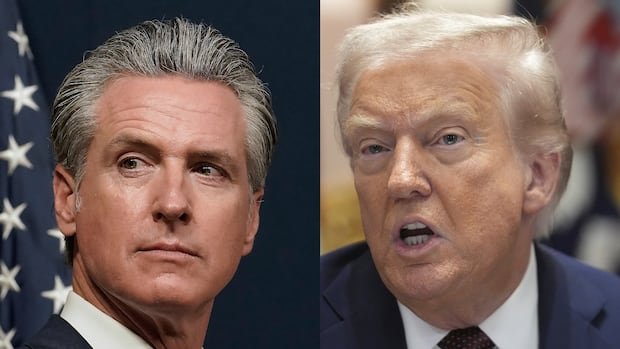

In a recent development, a federal judge in San Francisco has ruled that the U.S. government must cease the deployment of California National Guard troops in Los Angeles and hand back control to the state. The decision, issued by U.S. District Judge Charles Breyer, was in response to California officials’ plea against President Donald Trump’s unilateral utilization of the state’s National Guard forces without the consent of Governor Gavin Newsom.
Judge Breyer’s ruling, which was a preliminary injunction, has been temporarily suspended until Monday to allow the White House an opportunity to respond to the court’s decision. Governor Newsom criticized Trump’s actions in a social media post, stating that the deployment of the National Guard personnel in a manner contrary to their intended public safety duties was inappropriate.
California Attorney General Rob Bonta hailed the court ruling as a triumph for democracy and the rule of law, condemning the administration for politicizing the deployment of troops. The White House, through spokesperson Abigail Jackson, indicated its intention to challenge Breyer’s decision and expressed confidence in achieving a favorable outcome.
The initial deployment of over 4,000 California National Guard troops in Los Angeles by the Trump administration has now been reduced to approximately 100 troops, with several hundred Marines also being recalled from their deployment. Despite the dwindling numbers, the administration extended the deployment until February and attempted to involve California Guard members in Portland, Oregon.
The U.S. Justice Department argued that the continued presence of Guard members in Los Angeles was necessary to safeguard federal personnel and property in the area. This deployment marked a departure from the traditional protocol of obtaining a governor’s request before activating a state’s National Guard and underscored the administration’s aggressive stance on immigration enforcement.
Acknowledging the legal challenges against the administration’s deployment of National Guard troops, it is evident that the courts have been critical of the government’s approach in utilizing military forces for domestic purposes. The opposition to the deployment also highlighted concerns over the potential militarization of law enforcement functions and the impacts on communities affected by such actions.
In a separate legal setback for the Trump administration, other judges have also intervened to prevent the deployment of National Guard troops to cities like Portland, Oregon, and Chicago. These actions have raised questions about the administration’s motives and the implications of using military forces in civilian environments, particularly in cities governed by officials affiliated with the Democratic party.
As the legal battles continue, the debate over the appropriate use of National Guard troops and the boundaries set by laws like the Posse Comitatus Act remains unresolved. The incidents in California, including the tragic death during an ICE raid, underscore the human cost and complexities associated with immigration enforcement efforts undertaken by federal authorities.
In summary, the recent court ruling to halt the deployment of California National Guard troops in Los Angeles serves as a significant development in the ongoing legal and political debates surrounding the administration’s immigration enforcement policies.