
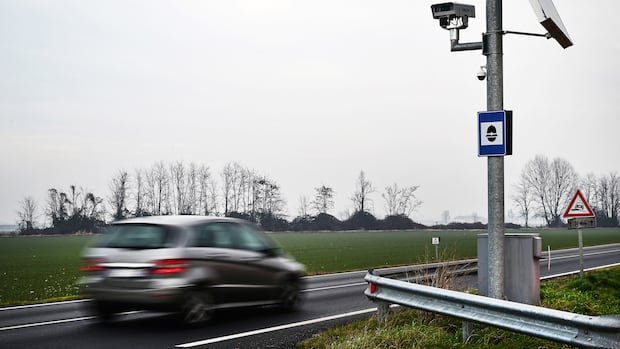

On a winter day in 2024, residents in a suburban town near Padua, Italy woke up to find a speed camera vandalized by an angle grinder with the message “Fleximan is coming.” This incident sparked a wave of similar attacks on speed cameras across Italy, elevating the name Fleximan to a legendary status in the country.
According to Tom Roper, a long-time resident in the region, Fleximan was celebrated as a local hero, with people inquiring about his identity. Despite the flashy vigilante actions of Fleximan, there is a widespread consensus in Europe that supports the effectiveness and necessity of speed cameras in promoting road safety.
Jenny Carson, a project manager at the European Transport Safety Council in Brussels, highlighted the high level of public support for speed enforcement measures, emphasizing the public’s desire for reduced speeds. Italy, housing the highest number of active speed cameras in Europe, demonstrated strong public backing for stricter speeding regulations, as revealed in a 2018 European survey.
In contrast to Ontario Premier Doug Ford’s stance against speed cameras, Europe has successfully garnered broad support for automated enforcement systems that have proven to save numerous lives annually. The French government, following a series of tragic traffic incidents in 2002, implemented over 2,400 speed cameras as part of a concerted effort to reduce road fatalities.
Experts like Laurent Carnis emphasized the critical role of political commitment in establishing effective speed camera systems, citing France’s success in utilizing both fixed and mobile cameras for education and punishment purposes. These measures have led to significant reductions in average speeds and road accidents across Europe, preventing an estimated 1,000 fatalities.
However, challenges persist as countries like France face opposition and vandalism of speed cameras due to perceptions of them being a revenue-generating tool. To maintain public support, experts advise governments to target extreme speeders transparently and sensibly. In Canada, concerns over speeding extend beyond enforcement, with a need to reassess speed limits and road design to address root causes of speeding behaviors.
Despite some opposition, proponents of speed cameras, like Roper in Italy, advocate for their continued use to curb reckless driving behaviors and enhance road safety. As debates on speed camera effectiveness continue, it remains crucial for policymakers to balance enforcement with public perception and road safety considerations.