
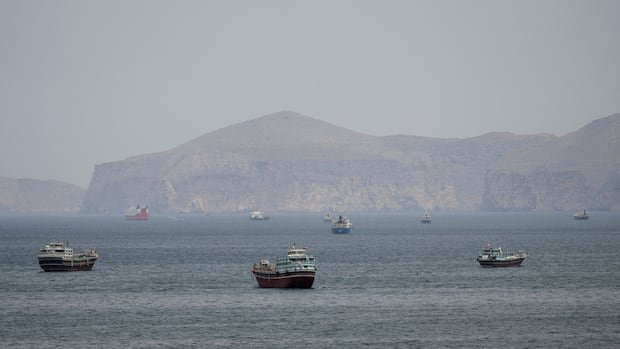

Iran carried out attacks on three ships in the Strait of Hormuz and captured two of them on Wednesday, escalating its actions against shipping in the crucial waterway. This occurred following the extension of a ceasefire by U.S. President Donald Trump while upholding an American blockade of Iranian ports.
The ongoing confrontation between the U.S. and Iran has effectively halted most exports through the strait, a route that typically sees 20% of the world’s traded oil pass through during peaceful times. Iranian media reported that the paramilitary Revolutionary Guard was taking the seized ships to Iran, signaling a further escalation. However, the White House stated that these seizures did not breach the ceasefire terms.
This conflict has led to a significant surge in gas prices well beyond the region and has impacted the costs of various goods. The longer the strait remains closed, the more severe and widespread the economic effects are likely to be, prolonging the recovery period. The price of Brent crude oil, the global benchmark, exceeded $100 US per barrel, marking a 35% increase from prewar levels, although stock markets have shown resilience.
The European Union energy commissioner, Dan Jørgensen, cautioned about lasting consequences for consumers and businesses, likening the crisis to previous major energy disruptions. The disruption is estimated to be costing Europe approximately $600 million US daily.
Iranian media reported that two ships, the MSC Francesca and the Epaminondas, were being escorted to Iran. The owners of these ships were unreachable for immediate comment. Previously, the U.S. had seized two Iranian vessels as ceasefire discussions were scheduled in Pakistan.
Technomar, the management firm for the Liberian-registered Epaminondas, stated that the ship was fired upon by a manned gunboat near Oman, resulting in damage to the ship’s bridge. Another cargo vessel was also targeted later, with no reported damage, but it was subsequently halted in the water. No crew injuries were reported on either vessel. Information about the third attacked ship, the Euphoria, was limited.
Since the U.S. and Israel initiated the war on Feb. 28 with a surprise attack on Iran, there have been over 30 ship attacks in the Middle East. Vortexa, an analytics company focusing on global energy and freight markets, recorded 34 movements of sanctioned and Iranian-related tankers in and out of the Persian Gulf in the week following the U.S.’s blockade implementation on April 13. This included 19 outbound and 15 inbound movements, with six of the outbound movements confirmed to be carrying Iranian crude oil, totaling approximately 10.7 million barrels.
The ability of Iran to control traffic in the strait has proven to be a significant strategic advantage. Despite the ceasefire leading to the cessation of American and Israeli airstrikes in Iran and Tehran’s missile targeting ceasing, the maritime threats persist, as evidenced by the recent attacks in the strait and earlier interdictions of Iranian ships by the U.S.
The lack of a diplomatic resolution is likely to deter ships from attempting to navigate through the waterway, further straining global energy supplies. Iranian parliament speaker Mohammad Bagher Qalibaf emphasized the necessity of a complete ceasefire that is not violated by the blockade, which he deemed as holding the world’s economy hostage.
Iran’s Foreign Ministry spokesperson, Esmail Baghaei, expressed skepticism about participating in upcoming negotiations with the U.S., citing the U.S.’s purported disregard and lack of good faith in the talks. The timeline for Iran’s decision-making process regarding negotiations remains uncertain, with tensions and uncertainties persisting in Tehran and beyond amid the ongoing geopolitical turmoil.
In Lebanon, a 10-day ceasefire was initiated, but there have been Israeli strikes, and Hezbollah claimed its first attack post-ceasefire. Efforts are underway to extend the ceasefire through negotiations involving Lebanese and Israeli representatives in Washington.
The conflict has resulted in significant casualties, with over 3,375 deaths in Iran, more than 2,290 in Lebanon, 23 in Israel, and fatalities in Gulf Arab states. The toll includes losses among military personnel, highlighting the human cost of the ongoing conflict in the region.