
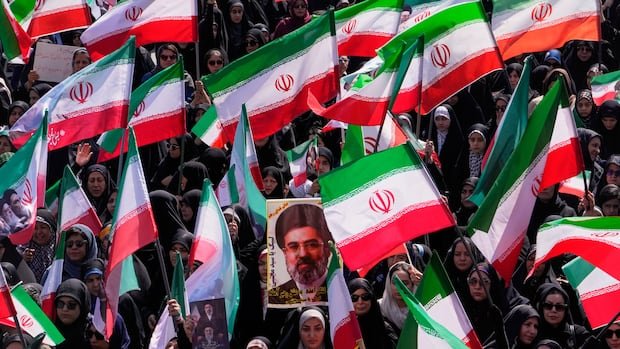

U.S. President Donald Trump has shifted his stance on Iran, initially calling for regime change and later praising the new leadership as more reasonable. Trump emphasized the change in leadership following the strikes that killed Ayatollah Ali Khamenei and other officials.
Despite the leadership transition, experts note that the current Iranian regime remains dominated by hardline militaristic figures with little inclination for compromise or reforms. The Islamic Revolutionary Guard Corps (IRGC) now wields significant power, leading to a more hardline and less forgiving regime.
The IRGC’s influence has expanded beyond military matters to governance and the economy, solidifying its control over Iran. The ongoing conflict with the U.S. and Israel has reinforced the regime’s military-centric approach, shifting away from religious ideologies.
The new leadership’s crackdown on dissent and political opposition within Iran has intensified, with reports of arbitrary arrests and executions. Analysts highlight that military actions against Iran have not destabilized the regime’s power structure.
Key figures within Iran’s security forces, such as Mohammad Bagher Zolghadr and Ahmad Vahidi, hold significant influence, overshadowing the visible leadership. The regime’s hardline stance poses challenges for peace talks, with negotiators showing reluctance to adhere to U.S. terms.
Trump’s decision to extend the ceasefire reflects the fragmented nature of Iran’s government, as internal divisions hinder negotiations. Iran’s leaders maintain staunch positions on key issues like uranium enrichment, signaling potential roadblocks in reaching a deal.