
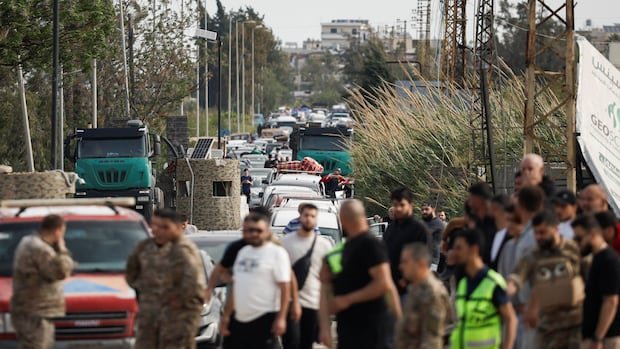

An individual in southern Lebanon was killed by an Israeli drone strike on Friday, marking the start of a U.S.-brokered ceasefire aimed at halting hostilities between Israel and Hezbollah, according to local paramedics and a hospital official. The news of the strike emerged shortly after U.S. President Donald Trump disclosed that the U.S. had forbidden Israel from carrying out further bombings in Lebanon.
Hezbollah ceased firing at Israeli targets upon the ceasefire taking effect but refrained from officially endorsing the agreement. The group attributed the ceasefire to pressure from Iran on Washington. Trump emphasized that any agreement the U.S. makes with Iran does not involve Lebanon, but the U.S. will address the Hezbollah situation appropriately.
Trump also mentioned that the U.S. would obtain Iran’s nuclear material without any financial transactions. Meanwhile, Iran’s foreign minister, Abbas Araghchi, declared that commercial vessels had unrestricted passage through the Strait of Hormuz for the remainder of the ceasefire period.
The temporary ceasefire, announced by Trump on Thursday between Lebanon and Israel, raised hopes for a potential resolution to the ongoing conflict between the United States and Iran. Displaced individuals in Lebanon began returning to their devastated towns and neighborhoods, finding many homes destroyed or uninhabitable, expressing concerns about the stability of the ceasefire between Hezbollah and Israel.
Although Trump indicated progress towards a longer-term agreement between Lebanon and Israel, uncertainties persist as the ceasefire does not mandate Israel to withdraw troops from the occupied southern areas. Hezbollah, backed by Iran, asserted its right to resist.
The Lebanese army reported Israeli violations of the ceasefire on Friday, including sporadic shelling in several southern Lebanese villages, advising citizens to delay their return to the affected areas. There was no immediate response from the Israeli military.
Residents of Hezbollah-controlled southern Beirut suburbs encountered extensive destruction, with rubble replacing former structures and a lingering scent of decay. Ali Hamza, a resident, shared his reluctance to return due to adverse conditions and the prevailing uncertainty.
In Qasmiyeh, makeshift crossings were established over the Litani River, following the destruction of major bridges by Israel during the conflict. The toll of the war in Lebanon included over 2,000 casualties, 1.2 million displaced individuals, and significant material damage.
Israeli Defense Minister Israel Katz highlighted that the area south of the Litani River needed to be cleared of Hezbollah presence and weaponry, indicating Israel’s intent to maintain a security zone extending into Lebanon. Lebanese President Joseph Aoun emphasized that any future agreements would safeguard Lebanon’s territorial integrity and national rights.
Efforts to disarm Hezbollah have been a longstanding challenge for the Lebanese government, with potential military action risking further unrest in a country scarred by past conflicts. Trump announced plans to host talks between Israeli Prime Minister Benjamin Netanyahu and President Aoun at the White House to foster bilateral relations.