
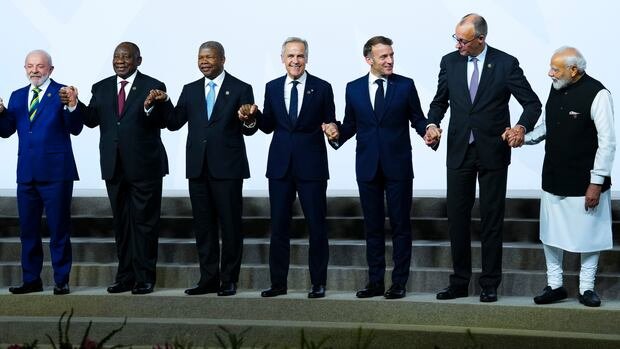

Leaders at the G20 summit in South Africa raised concerns about the group’s future amid rising geopolitical tensions and a shifting global landscape. Established in the late 1990s, the Group of 20, co-founded by former Prime Minister Paul Martin, convenes annually since 2008 to address international economic and financial stability.
The G20 symbolizes multilateralism, emphasizing cooperation and coordination for mutual benefit. However, the current global order faces challenges. French President Emmanuel Macron warned of a potential end to the G20 era, citing difficulties in resolving crises collectively.
The disruptive force of the United States, led by President Donald Trump, is central to this global shift. Trump’s trade disputes and transactional diplomacy have overshadowed cooperation, prompting nations to prioritize economic security over unity.
Even China, often criticized for destabilizing global security, expressed apprehension about the future under the prevailing unilateralism and protectionism. At the summit, leaders debated the erosion of global solidarity, with Finland’s President Alexander Stubb echoing concerns over the decline of multilateralism.
Notably, Trump’s absence at the summit raised questions about global unity. However, it also reinforced solidarity among participating nations. Foreign Affairs Minister Anita Anand highlighted the importance of consensus-building among G20 members and outreach partners.
Amidst the challenges, countries like Canada are forging new alliances to strengthen trade and security cooperation. Canada’s commitments include a significant investment from the U.A.E., negotiations for a trade agreement with India, and efforts to enhance partnerships with the EU and Asian nations.
As the global economy undergoes a transformative phase, characterized by a diffusion of power and influence, there is a call for middle powers like Canada to play a pivotal role in shaping multilateral frameworks for collective prosperity.
The G20’s evolution reflects a changing landscape where traditional power structures are giving way to more inclusive and collaborative arrangements. Despite uncertainties, advocates maintain that multilateralism remains essential for navigating the complexities of the modern world.