
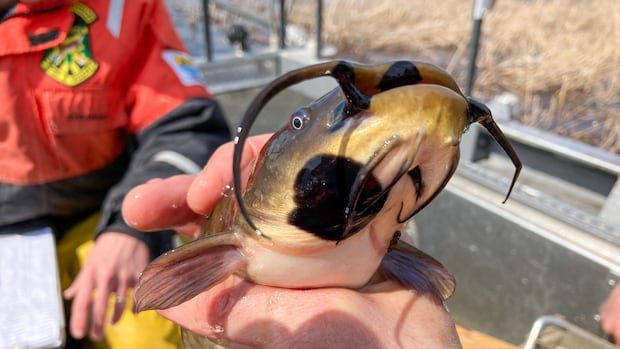

A groundbreaking genetic study reveals a rare case of cancerous tumours spreading among catfish populations in Quebec and the northeastern U.S. The research, recently published in the journal Nature, identifies this as the first documented transmissible cancer in fish and one of only a handful ever recorded.
Lead researcher Julie Dragon highlights the uniqueness of this discovery, noting that only three other instances of transmissible cancers have been documented in Tasmanian devils, dogs, and shellfish. The appearance of melanoma skin cancer tumours in brown bullhead catfish in Lake Memphremagog raised concerns among locals following a significant flood in the region.
Although initial suspicions pointed to carcinogens from the floodwaters, further investigations did not provide conclusive evidence. Dragon’s team explored the possibility of a viral cause but found no evidence of viruses in the affected fish. Genetic testing revealed that the fish were not inbred but displayed significant genetic diversity.
One of the most surprising findings was that the cancer cells in the affected fish were more similar to each other than to the host fish’s cells. This led researchers to consider the possibility of a transmissible cancer infecting the catfish, similar to the case of transmissible shellfish cancer previously studied.
While the exact transmission mechanism is yet to be confirmed, the researchers speculate that the disease may be spread during spawning events when adult fish come into close contact. Despite ongoing research efforts, some scientists remain cautious about labeling this as a transmissible cancer until direct transmission is demonstrated.
The study received funding from various U.S. and Vermont government agencies, with the support of Quebec’s Ministry of the Environment. Recommendations advise against consuming fish with tumours, although there is no evidence of harm to human health. The presence of tumour-afflicted catfish has been reported in other water bodies, prompting anglers to report any similar findings for monitoring purposes.