

Doreen Edna Buhler, who passed away at the age of 96, led a challenging yet extraordinary life. Following her father’s death, she departed from her birthplace in Calahoo, Alta., and ventured into city life, where she joined her husband in running his family’s diner in Edmonton. Widowed at 39, Buhler drew strength from her faith and supported her 13 children by working as a baker, pastry chef, and cook in various kitchens throughout the city.
Even in death, Buhler’s legacy continued through her final wish to donate her body to the University of Alberta’s Anatomical Gifts Program. This act allowed future medical professionals to learn from the body that had carried her through life. At a recent commemorative service for anatomical donors at the university, Brigid Burton fondly described her mother as “incredible” and highlighted the untold chapter of her life.
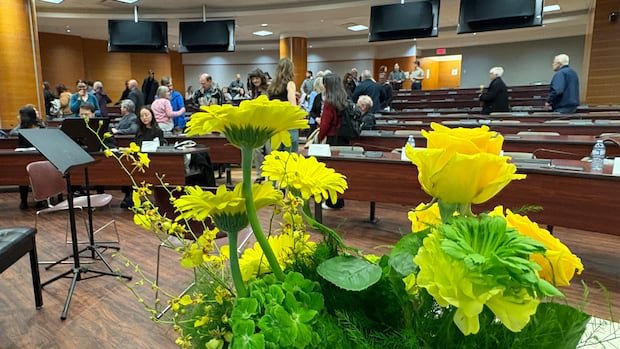
The annual memorial, held by the Faculty of Medicine & Dentistry at the university, gathered students and faculty to honor those who generously donated their bodies to the program. Dr. David Williams, chair of the surgery department, expressed gratitude to donor families for upholding their loved ones’ wishes and contributing to the education of numerous medical students each year.
Anatomical donations play a crucial role in various health and research programs on campus, benefiting disciplines such as medicine, dentistry, kinesiology, physical therapy, and physical education. The Anatomical Gifts Program at the University of Alberta, operational since 1921, receives between 50 and 80 donations annually, with over 10,000 individuals having registered their intent to donate.
These donations provide students with invaluable hands-on learning experiences, enabling them to grasp anatomical relationships within the body, understand disease progression, and practice rare procedures. Donors can opt to have their remains returned to their families or be cremated and scattered at a dedicated plot maintained by the university.
The act of entrusting one’s body to science is considered a courageous and vulnerable decision, as emphasized by second-year medical student Margaret Juryn during the memorial service. She commended the donors for their bravery in making such a selfless choice, highlighting the unique educational opportunities that real human bodies offer to aspiring medical professionals.