

In a significant development for First Nations, the year 2025 concluded much like it began, with the Canadian government engaged in legal battles with Indigenous communities over its obligations to provide essential services to Indigenous children. Despite its efforts, the government faced repeated setbacks in court.
In late December 2024, the Trudeau administration initiated a legal challenge against the Canadian Human Rights Tribunal to contest a ruling mandating the resolution of a backlog of requests under the Jordan’s Principle initiative. However, a year later, on December 15, 2025, the Carney government suffered a defeat in a landmark Jordan’s Principle case at the Federal Court of Appeal, reinforcing Canada’s legal responsibilities.
While these legal battles characterized the year, there were also notable shifts in the Indigenous political landscape. The ongoing challenges within the Jordan’s Principle program were evident, with Indigenous Services Canada facing criticism for implementing a new operational bulletin that restricted funding for essential services amid a growing backlog of requests.
The contentious changes led to real-life consequences, such as the suspension of a suicide-prevention program in the Cree community of Kashechewan and the loss of funding for an autistic child’s education in southern Ontario. Individuals affected by these changes took legal action, including First Nations grandmother Joanne Powless, who secured a victory against the government at the Federal Court of Appeal.
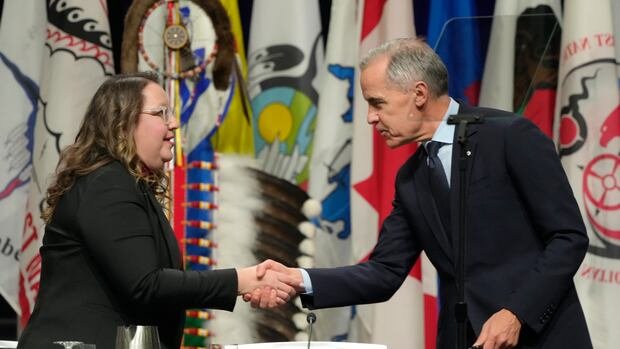
In parallel, the political scene in Ottawa saw significant upheaval with the election of Mark Carney as Prime Minister. Carney’s policies, including potential pipeline projects, drew swift criticism from Indigenous leaders, prompting demands for inclusion and threats of protests. In response to mounting concerns, the government organized summits to address Indigenous leaders’ apprehensions.
Additionally, the year witnessed a landmark ruling in the Cowichan case, where the Cowichan Tribes were granted Aboriginal title to disputed land in Richmond. The decision raised questions about the coexistence of Aboriginal title and private property rights, setting the stage for potential appeals and further legal proceedings.
In Métis politics, a high-profile civil trial concluded with the Manitoba Métis Federation prevailing over the Métis National Council in a multimillion-dollar lawsuit. The trial exposed allegations of mismanagement of funds earmarked for a veterans recognition program, leading to a significant legal victory for the Manitoba federation.
As the year drew to a close, the Indigenous political landscape remained dynamic, marked by legal battles, policy debates, and landmark rulings that underscored the ongoing challenges and triumphs within Indigenous communities.