
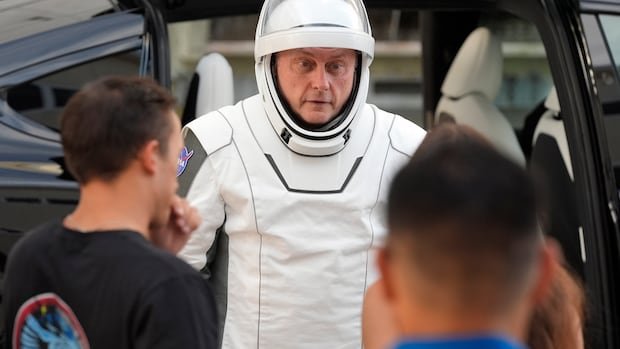

A veteran astronaut, Mike Fincke, who triggered NASA’s initial medical evacuation earlier this year, revealed that the cause of his sudden illness at the International Space Station remains unknown. During dinner preparations for a spacewalk on January 7, Fincke experienced the unexpected health issue where he lost the ability to speak, although he recalls feeling no pain. Alarmed crewmates swiftly sought assistance from ground-based flight surgeons upon witnessing his distress.
In an interview from Houston’s Johnson Space Center, the 59-year-old retired Air Force colonel described the event as swift and unanticipated, lasting approximately 20 minutes, with no lingering effects afterward. Fincke, a four-time space traveler, emphasized that he had never encountered such a situation before and that doctors have ruled out a heart attack or choking. However, the underlying cause, potentially linked to his 549 days of weightlessness, remains under investigation.
Describing the incident as striking like “a very, very fast lightning bolt,” Fincke highlighted the prompt response of his crewmates, who rallied around him within seconds. While he refrained from disclosing further details about the episode to preserve medical privacy, he indicated that NASA is committed to safeguarding astronauts’ confidentiality in such situations.
Following his return to Earth, Fincke underwent a series of medical evaluations facilitated by the space station’s ultrasound equipment. NASA is meticulously reviewing medical records of other astronauts to identify any similar occurrences in space. Fincke publicly disclosed his identity as the afflicted astronaut last month to dispel speculations surrounding the incident.
Expressing regret over the canceled spacewalk, which would have been his 10th and the first for crewmate Zena Cardman, Fincke acknowledged the early return of his colleagues aboard a SpaceX mission on January 15. Despite the unexpected turn of events, he remains optimistic about the prospect of future space missions.
Amidst expressions of empathy and support from colleagues, Fincke was advised by NASA’s administrator, Jared Isaacman, to refrain from apologizing for circumstances beyond his control. Encouraged by his peers, Fincke has embraced a positive outlook, aspiring to venture into space once again in the future.