
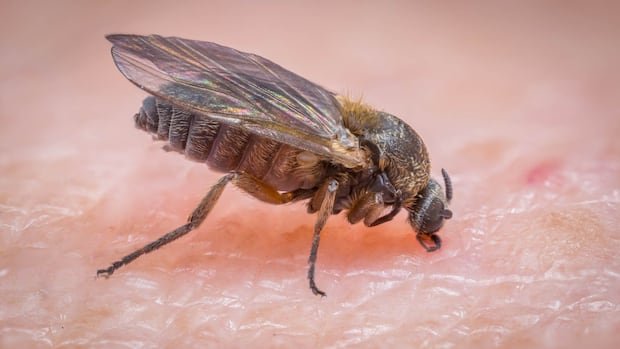

As temperatures rise across Nova Scotia, many residents are noticing a higher presence of blackflies compared to previous years, signaling the start of their seasonal emergence. Andrew Hebda, a former zoology curator at the Nova Scotia Museum, explained to CBC’s Information Morning Halifax that blackflies are typically inactive during colder months but become active in spring as temperatures increase, with this season’s emergence occurring rapidly.
Hebda mentioned that within 10 to 14 days of warm weather, the majority of blackflies will have emerged, reproduced, and completed their life cycle for the year, as they only have one generation annually. In contrast to mosquitoes, which can have multiple generations in a season, blackflies will not reappear until the following year after reproducing and perishing.
Last year’s dry conditions suppressed the blackfly population despite higher temperatures, according to Hebda. To avoid blackflies, he advised staying away from tall grass and wooded areas. For mosquitoes, open areas with strong winds are recommended. Additionally, using bug sprays to mask scent or wearing bug jackets as a physical barrier can help deter insect bites.
For more information on blackflies and outdoor precautions, please visit the source link.