
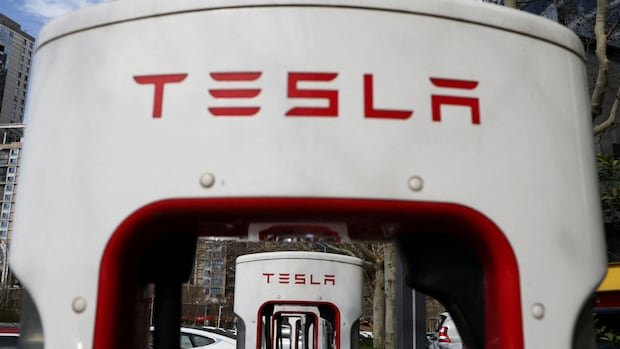

The U.S. government announced on Monday that Tesla, an electric vehicle (EV) manufacturer, and LG Energy Solution from South Korea have finalized a contract to establish a $4.3 billion lithium iron phosphate (LFP) prismatic battery cell production facility in Lansing, Michigan. The facility is expected to commence production in 2027.
According to a statement from the U.S. Department of the Interior, the agreement aims to supply American-made cells for Tesla’s Megapack 3 energy storage systems manufactured in Houston, thereby enhancing the domestic battery supply chain.
This agreement was disclosed as part of a broader announcement made during the Indo-Pacific Energy Security Summit under the administration of President Donald Trump. Earlier in July, a source revealed to Reuters that LG Energy Solution had secured a $4.3 billion deal to provide energy storage system batteries to Tesla. This move was driven by Tesla’s strategy to decrease its reliance on Chinese imports due to imposed tariffs.
LG Energy Solution, a prominent producer of LFP batteries in the U.S., competes with Chinese counterparts who have a limited presence in the American market. The company also operates NextStar Energy in Windsor, Ontario, a battery cell plant that was previously a joint venture with Stellantis until LG acquired full ownership recently.
The Canadian plant, heavily subsidized by the Ontario and Canadian federal governments, initially targeted the EV battery market but has shifted focus to prioritize energy storage amid a sluggish EV market, although it retains the capacity to produce batteries for both segments.