
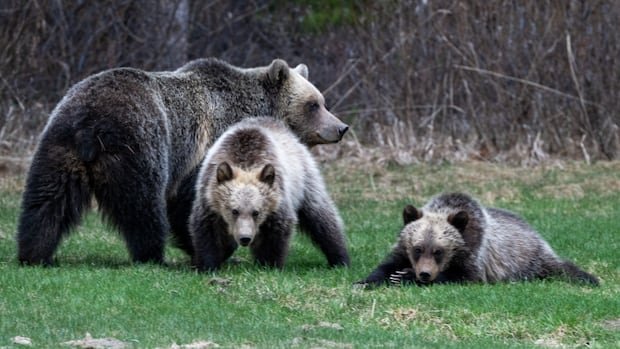

A well-known grizzly bear in Banff National Park tragically lost one of her cubs in a train accident on Sunday. Parks Canada confirmed the incident, stating that the young grizzly bear was struck and killed near the Eldon siding close to the Protection Mountain Campground. The deceased cub was part of a pair seen with the renowned female Grizzly Bear 142.
The mother bear, approximately 16 years old, is familiar to many in the Bow Valley due to her frequent presence in areas with human activity. Wildlife photographer Jason Leo Bantle expressed sorrow over the loss, drawing parallels to the demise of white grizzly bear Nakoda in Yoho National Park in 2024.
Bantle emphasized the crucial role of mother bears in maintaining the bear population in the valley, highlighting the significance of each mother. Banff National Park is home to around 65 grizzly bears, classified as a threatened species by the Alberta government and a species of special concern by the federal government.
Bear 142, the offspring of Bear 122, also known as “The Boss,” is recognized for her lineage and importance in the grizzly bear population. The mother bear has faced previous losses, notably when the infamous grizzly Split Lip killed and consumed one of her cubs in 2020.
Grizzly bears have low reproductive rates, with adults typically breeding between five to eight years old and sows having litters every three to five years. The sensitive status of grizzly bears is attributed to their reproductive patterns.
The Canadian Pacific Kansas City (CPKC) rail line passing through Banff National Park has been a significant cause of mortality for inexperienced grizzly bears. Parks Canada has documented 19 grizzly bear deaths on railways in Banff National Park since 2005.
Efforts to reduce collisions have been implemented following a joint study by Parks Canada and CPKC in 2010. These initiatives include alternative wildlife travel routes, prescribed burns, forest thinning for better habitats, and vegetation management programs to clear attractants and create escape paths.
University of Alberta professor Colleen Cassady St. Clair commended Parks Canada’s efforts to facilitate bear movement away from the railway tracks. Factors like grain spills, plant abundance, and human activity attract bears to the tracks.
CPKC spokesperson Terry Cunha stated that the railway company collaborates with Parks Canada to manage and remove attractants along the tracks to mitigate risks of animal strikes. Warning systems are being tested to deter bears from approaching trains.
St. Clair emphasized the importance of reducing wildlife mortality rates to safeguard rare species in protected areas and promote their thriving populations. The tragic loss of a single cub underscores the broader goal of minimizing mortality rates of rare species in protected areas.
[Source](https://www.cbc.ca/news/canada/calgary/bear-142-cub-banff-9.7206008)