

U.S. President Donald Trump expressed backing for a change in leadership in Iran on Friday and emphasized the imminent bolstering of influence in the Middle East, coinciding with the deployment of a second aircraft carrier by the Pentagon to the region.
The Trump administration’s military maneuvers and assertive rhetoric persist as efforts are made by Washington and Tehran to reinvigorate diplomatic discussions regarding Tehran’s enduring nuclear dispute with Western nations.
According to a briefed source, U.S. envoys Steve Witkoff and Jared Kushner are slated to engage in negotiations with Iran on Tuesday in Geneva, facilitated by representatives from Oman. The two envoys are also scheduled to meet with officials from Russia and Ukraine on the same day, aligning with the U.S. initiative to resolve the conflict in Ukraine.
When asked about his stance on regime change in Iran, Trump suggested it could be a favorable development. He declined to specify potential successors but indicated that viable candidates exist.
Trump criticized the prolonged history of talks with Iran, highlighting the toll it has taken in terms of casualties and injuries sustained. He emphasized the need for decisive action in the face of protracted negotiations.
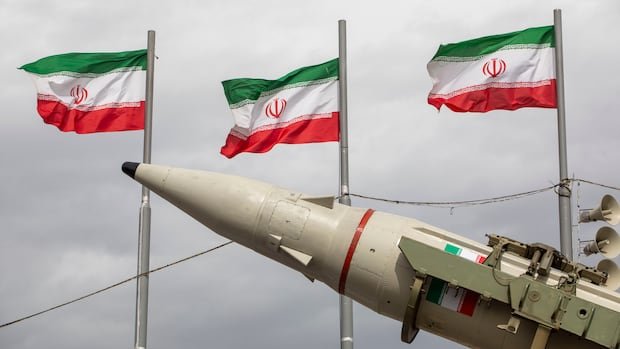
The U.S. is seeking to broaden the scope of nuclear discussions with Iran to encompass ballistic missiles, regional support for armed groups, and the welfare of the Iranian populace. While Iran has expressed readiness to consider limitations on its nuclear program in exchange for sanctions relief, it has rebuffed any attempts to intertwine the missile issue with the negotiations.
In the event an agreement is not reached, Trump has not hesitated to warn of potential strikes against Iran, a threat reciprocated by Tehran, heightening concerns of escalating conflict as U.S. forces amass in the Middle East. The U.S. previously targeted Iranian nuclear facilities in strikes conducted last year.
The deployment of the carrier Gerald R. Ford, the newest and largest carrier globally, alongside the carrier Abraham Lincoln, guided-missile destroyers, fighter jets, and surveillance aircraft underscores the augmented U.S. presence in the Middle East. The carrier’s journey to the region is expected to take at least a week.
With limited aircraft carriers in the U.S. military, their deployment is a strategic move that necessitates careful planning. The U.S. Southern Command reiterated its commitment to combating illicit activities in the Western Hemisphere.
The extended deployment of carriers at sea, though commonplace during heightened military activities, raises concerns about crew morale. While the carrier Bush was considered for deployment to the Middle East, logistical constraints led to the decision to dispatch the Ford instead.
Equipped with a nuclear reactor, the Ford has the capacity to accommodate over 75 military aircraft, including F-18 Super Hornet jets and E-2 Hawkeye early warning aircraft. The carrier’s advanced radar capabilities enhance air traffic control and navigation, supported by accompanying vessels with diverse warfare capabilities.
The developments underscore the escalating tensions in the region, as diplomatic efforts intertwine with military posturing, underscoring the delicate balance of power in the Middle East.