
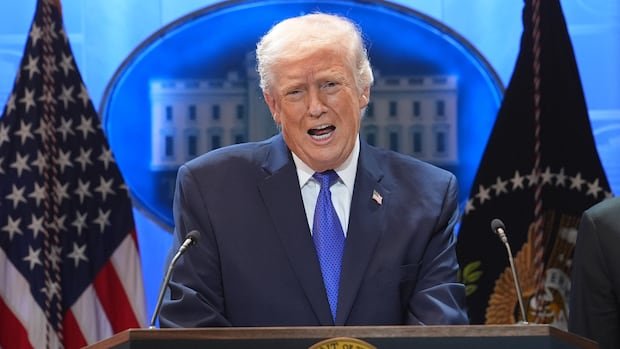

In the recent news conference concerning the Supreme Court’s ruling on tariffs, U.S. President Donald Trump’s visible frustration hinted at Friday being a challenging day in his second term. The court, with the support of three conservative justices, including two of Trump’s nominees, delivered a 6-3 blow against the president in a crucial case. This ruling stripped Trump of the authority to impose tariffs under the International Emergency Economic Powers Act (IEEPA), a basis for his trade war strategy.
Despite this setback, Trump dismissed the ruling, claiming to have potent alternatives at his disposal. He announced plans to implement a 10% global tariff through a different legislative avenue, asserting it could generate even more revenue than his previous strategy. The decision to pursue this new approach raises questions about why Plan B was not the primary choice from the start.
Trump’s response to the court’s decision exhibited his reluctance to accept defeat, a pattern observed since the 2020 election. He criticized the justices who ruled against him, accusing them of being swayed by foreign interests and labeling them as “fools and lapdogs.” This reaction reflects his strong desire to maintain his original tariff plan.
Experts anticipate Trump’s administration to reconstruct the tariff program, despite the court ruling. The president’s unwavering belief in the effectiveness of tariffs and his strategy to bolster domestic production through higher tariffs remain unchanged. However, the political implications of the court’s ruling and Trump’s response cannot be ignored, especially given his declining approval ratings and growing discontent within the Republican Party regarding tariffs.
While Trump vows to move forward with his alternative tariff plans, the global trading landscape, including Canada, braces for the economic repercussions of his decisions. The court’s reliance on constitutional principles to limit presidential tariff powers underscores the ongoing uncertainty surrounding Trump’s trade policies and their impact on international trade relations.