

Jamaica’s Financial Resilience Tested by Hurricane Melissa
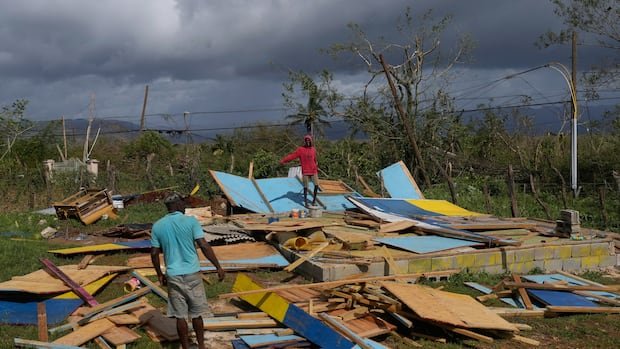
Jamaica has spent the last ten years fortifying its financial defenses against natural disasters. Following the havoc wreaked by Hurricane Melissa, which ravaged homes, roads, and critical infrastructure, Jamaica’s preparedness strategy could prove beneficial and serve as a blueprint for other climate-vulnerable nations.
In the previous year, Jamaica issued a $150 million US catastrophic, or “cat,” bond, designed to activate under specific hurricane strength and path parameters. Florian Steiger, CEO of Icosa Investments, a Swiss catastrophe bond-focused firm, explained that these bonds are tied to a hurricane’s central pressure upon landfall. While a third party must validate the trigger, it is evident that the required threshold has been surpassed in this instance. Steiger confidently stated, “Based on everything we’ve seen, the payouts are going to happen.”
The funds could reach Jamaica within days. Apart from the cat bond, Jamaica has diversified its disaster risk management with insurance policies covering extreme rainfall and tropical storms through a regional insurance pool for Caribbean countries. Additionally, Jamaica can access credit lines from the World Bank and the Inter-American Development Bank.
Conor Meenan, a risk financing adviser at the Centre for Disaster Protection in the U.K., praised Jamaica’s comprehensive strategy, highlighting the country’s access to approximately $820 million US in post-disaster financing.
Although this sum may not cover the anticipated billions of dollars in damages caused by Hurricane Melissa, the insurance-related funds will facilitate swift restoration of crucial services like roads, healthcare, and telecommunications.
Jamaica’s $150 million US cat bond, issued in 2024 with assistance from the World Bank, was funded by the country itself, with investors primarily from North America and Europe. The bond matures in 2027, spanning four hurricane seasons.
In a unique approach, the bond payout is triggered not by the cost of damage but by the severity of the storm, based on factors like central air pressure and storm path over specific areas of Jamaica. This differentiates it from traditional insurance schemes.
Despite the potential impact on investors, the broader market’s resilience remains unaffected by the loss of $150 million US in a single transaction with Jamaica. Analysts underscore the opportunity for lower-income countries to leverage the substantial market for catastrophe bonds to mitigate climate risks.
Jamaica’s innovative financial strategies could serve as a model for other climate-vulnerable nations, demonstrating effective post-disaster fund accessibility. As governments brace for increasingly severe storms fueled by climate change, initiatives like cat bonds can play a vital role in bolstering global economic resilience and risk-sharing practices.