

Shelley Carr was excited when she connected with a new Tinder match last autumn, engaging in conversations about art, politics, and theatre. Being an artsy individual who frequents art galleries and theaters, she felt a strong connection with the person. Hoping to see if the spark would translate offline, she arranged a meetup in Hamilton. However, upon meeting him as he alighted from the bus, she immediately sensed that the person in front of her did not match the eloquent persona she had interacted with. Her suspicions were confirmed when he confessed that the articulate messages were not his own but generated by ChatGPT.
This incident sheds light on the impact of AI on online dating, with diverse opinions on whether it enhances or complicates the dating landscape. Various companies are embracing AI technologies to introduce new features aimed at improving the user experience and addressing dating fatigue. However, some users, especially women like Regina Hay from Toronto, express concerns that AI interventions blur the lines between authenticity and artificiality, affecting the genuineness of connections.
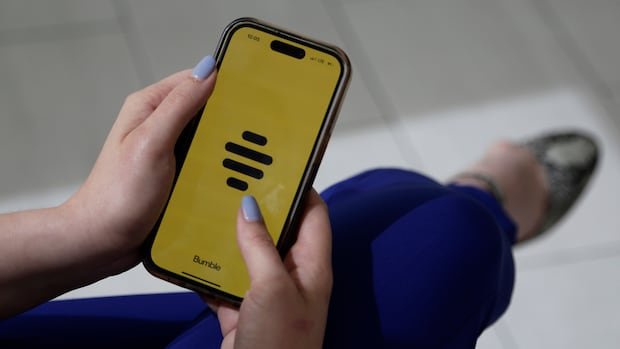
Platforms like Bumble and Facebook have integrated AI tools into their apps to offer personalized guidance and profile enhancements. These tools, according to Skyler Wang, a research scientist and sociology professor, can assist users in optimizing their profiles for better matchmaking outcomes. Yet, the proliferation of AI-generated content raises challenges in discerning genuine interactions, as highlighted by Carr’s experience.
The use of AI in crafting dating profiles and messages raises questions about individuality and authenticity. Eve Tilley-Coulson points out that the homogenization of profiles due to AI assistance may dampen users’ interest in the dating scene, as uniqueness becomes scarce. The concern is echoed by Hay, who values genuine connections over automated conversations facilitated by AI.
Innovations in AI extend to matchmaking services like Keeper.AI, which utilizes algorithms to pair individuals based on extensive user-provided information. This approach aims to streamline the matchmaking process and enhance compatibility, as highlighted by CEO Jake Kozloski. While these advancements offer a quality-focused alternative to traditional dating apps, there are concerns that the gamification of love through AI solutions may detract from the organic and romantic essence of relationships.
The evolving landscape of AI in online dating presents a mixed bag of opportunities and challenges, influencing how people navigate digital platforms to seek meaningful connections.