
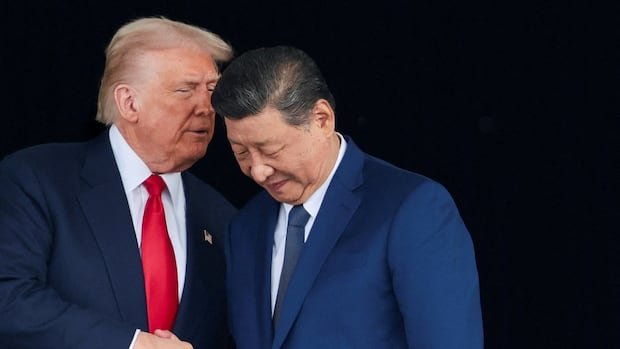

President Donald Trump announced a tariff reduction agreement with President Xi Jinping of China during their meeting in Busan, South Korea. The deal involved cutting tariffs on Chinese imports from 57% to 47%, specifically targeting fentanyl precursor drugs by halving the related tariffs from 20% to 10%. This move was tied to Beijing’s commitment to combat the illicit fentanyl trade, resume purchasing U.S. soybeans, and continue exporting rare earths.
Trump described the meeting as “amazing,” rating it a “12 out of 10.” While the tariff reduction was praised, only India and Brazil now face higher tariffs among major U.S. trading partners. Xi emphasized further cooperation in comments reported by Chinese state media post-meeting, with China’s Commerce Ministry announcing a one-year halt to some retaliatory measures.
Expectations of a trade breakthrough between the U.S. and China had boosted global stock markets before the meeting. Despite the positive developments, concerns lingered about the longevity of the truce, given past setbacks in trade negotiations.
The meeting, held on the sidelines of the Asia-Pacific Economic Cooperation (APEC) summit, lasted nearly two hours. Both leaders expressed willingness to address each other’s concerns and laid a foundation for future relations. Trump highlighted China’s commitment to purchase significant amounts of U.S. soybeans immediately.
The recent agreement came amidst escalating tensions over rare earth exports and technology controls. While Trump did not provide specifics on U.S. concessions, he confirmed China’s soybean purchases. Previous trade deals, including those on rare earths and retaliatory tariffs, are set to expire soon, raising uncertainties about the sustainability of the current trade detente.
Trump’s trip also involved signing agreements with Japan and Southeast Asian nations to diversify rare earth supplies. The leaders did not delve into discussions about Nvidia’s advanced Blackwell artificial intelligence chip. Treasury Secretary Scott Bessent disclosed that China pledged to buy 12 million metric tonnes of American soybeans by January and committed to purchasing 25 million tonnes annually for the next three years. Southeast Asian countries also agreed to acquire an additional 19 million tonnes of U.S. soybeans, as per Bessent’s statement on Fox Business Network.