
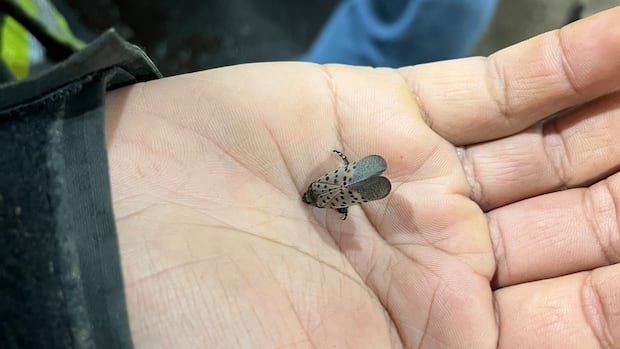

A recent finding of the spotted lanternfly in St. Catharines, Ontario, has reignited concerns about this harmful insect making its way into Canada from the United States. While there are no confirmed reproducing populations of the spotted lanternfly in Canada, experts warn that this invasive species poses a significant threat to vineyards, fruit trees, and hardwoods due to its feeding habits that can lead to the death of grapevines.
Aidan Dagg, a resident of Ontario and a nursery inspector in St. Catharines, discovered a deceased spotted lanternfly last month and documented it on iNaturalist, a platform for sharing and identifying plants and animals. This was the first time Dagg had encountered this insect despite actively searching for it over the past few years.
According to Diana Mooij from the Canadian Food Inspection Agency (CFIA), the spotted lanternfly can damage over 100 tree and plant species, posing a severe risk to the grape and wine industries. Upon reporting the sighting to the CFIA, inspectors promptly investigated and recovered 12 deceased adult spotted lanternflies from the same shipment of planting pots imported from Pennsylvania that had been sitting since the previous fall.
Research scientist Amanda Roe explained that spotted lanternflies often travel in shipments and can hitchhike on flat surfaces like vehicles, making them a common pest in areas near the U.S. border. The spotted lanternfly was initially detected in the U.S. in 2014, and it has since spread to 19 states, causing significant economic losses if left unchecked.
Melody Keena, a retired research entomologist, highlighted that warmer temperatures favor the growth of spotted lanternfly populations. Despite potential challenges posed by winter conditions, the insect has shown resilience to survive in various climates, including colder regions like Chicago.
The CFIA advises the public to remain vigilant for spotted lanternflies and report any sightings promptly for effective monitoring and control of this invasive species.