

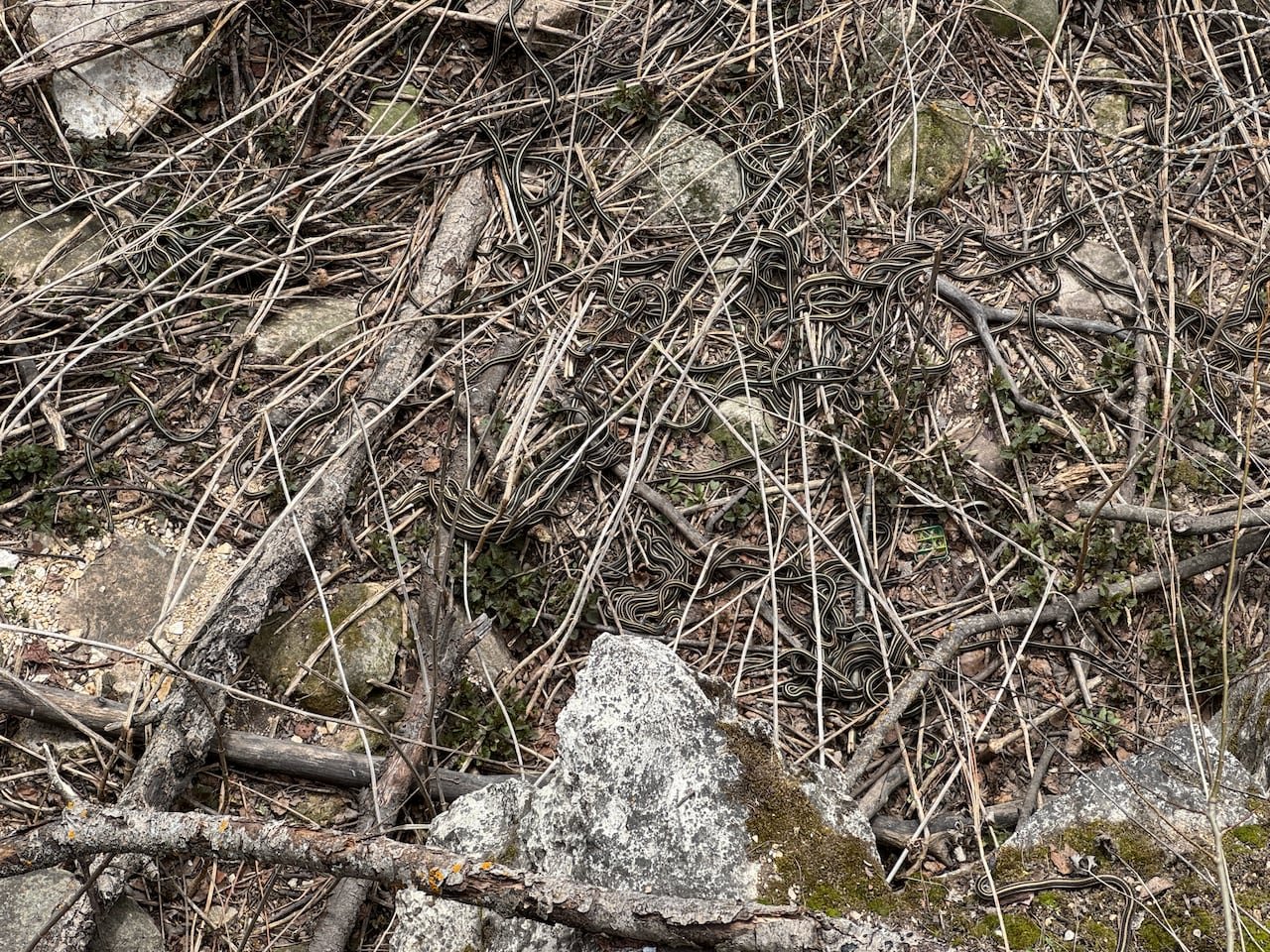
The annual gathering of garter snakes in Manitoba, known as the largest in the world, has commenced in Narcisse, albeit slightly later than usual. Tens of thousands of these snakes are emerging from their winter dens in Manitoba’s Interlake region to engage in mating activities as the weather gradually warms up.
This year, the emergence was delayed due to cooler spring temperatures. However, the province recently confirmed that the snake population had reached a sufficient number for spectators to observe this natural spectacle.
Retired biologist Doug Collicutt explained that male snakes typically emerge first to await the arrival of female snakes. Upon their emergence, a frenzy of mating occurs, with males vying for the opportunity to mate with the females as they make their way out of the dens and onto the surrounding ground.
During this event, visitors can witness clusters of snakes forming “mating balls,” Collicutt added.
Collicutt noted that the snakes’ emergence is influenced by soil temperature and rainfall patterns. Insufficient rainfall can impede the warming of the ground, delaying the snakes’ emergence.
Over the weekend, approximately 100 people were seen walking the trail that connects the snake dens. One visitor, Liam Warren, counted 59 snakes despite expecting to see fewer due to the cold weather.
Veronique Simard, who had long desired to visit the snake dens, expressed satisfaction with the three-hour drive from Brandon to witness the event with her family.
According to Collicutt, the snake emergence lasts about a month before the garter snakes disperse to their summer hunting grounds, where they feed on various prey, including leeches, insects, and occasionally young birds.

Raelene Sawatzky-Dyck, a snake interpreter, mentioned that the snakes disperse to different locations for feeding purposes, covering distances of up to 20 or 30 kilometers. They eventually return to their dens in early September as the fall weather sets in.
Aiden Schmidt, a 10-year-old visitor, found the gathering of snakes fascinating and not intimidating, appreciating the unique appearance of their scales.
It is estimated that 70,000 to 100,000 snakes inhabit the area during each spring emergence, although their exact behavior and den preferences remain challenging to study due to their small size.


Providing reliable news, thoughtful insights, and balanced coverage across politics, business, culture, and global affairs. We are committed to factual reporting that informs, engages, and empowers readers every day.