

During a session with Members of Parliament on Wednesday, a Stellantis executive faced questioning regarding whether significant subsidy agreements made with the Canadian government in recent years included commitments to preserve Canadian auto jobs, a point reiterated by government officials.
While addressing a House of Commons committee, the former president of Stellantis Canada, Jeff Hines, emphasized the company’s dedication to the Canadian automotive industry. However, he refrained from directly confirming if previous agreements included safeguards for current positions.
“We are devoted to our employees in Brampton and across Canada,” stated Hines. “Some details of past agreements may be confidential, but our focus remains on retaining the Canadian workforce.”
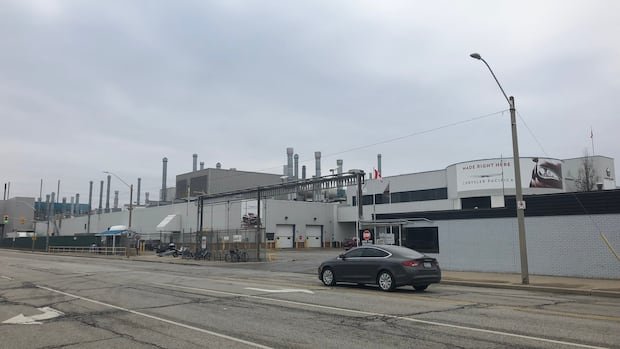
Hines’ appearance comes after considerable criticism of the company’s decision to relocate production of the Jeep Compass from the Brampton, Ontario plant to the Belvidere Assembly Plant in Illinois, leaving employees uncertain about their future.
Recently appointed as the head of North America fleet solutions at Stellantis, Hines previously served as the company’s president for Canada. Stellantis, known for brands such as Dodge and Chrysler, employs approximately 9,000 individuals in Canada and plans to recruit an additional 1,500 in Windsor, Ontario.
Highlighting investments of $8.6 billion in the country since 2022, Hines expressed the company’s desire to further expand in Canada. However, he acknowledged economic and trade uncertainties as factors influencing the company’s future endeavors.
Appearing before the House of Commons Standing Committee on Industry and Technology, which is conducting an urgent study on the sector and the government’s financial agreements with Stellantis following the Brampton plant news, Hines assured that the company has intentions for its Brampton facility.
While contemplating various options for the Brampton site, Hines indicated uncertainty about the timing of a decision due to economic conditions. He recognized that U.S. tariffs under former President Donald Trump influenced the decision to shift production but emphasized other factors as well.
Noting the provision of transfer opportunities for affected employees, Hines expressed Stellantis’ commitment to finding sustainable solutions for displaced workers in Brampton.
Although federal government officials claimed Stellantis agreed to maintain its Canadian presence, which includes the Brampton facility and a Windsor plant, as part of a substantial federal-provincial deal for an electric vehicle battery plant, an analysis by CBC News did not find explicit guarantees in the unredacted documents.
In response to queries, Hines affirmed the company’s intention to sustain its footprint in Windsor and shared enthusiasm for expanding to a third shift. He mentioned that the NextStar EV Battery Plant in Windsor has already employed 1,000 individuals out of an anticipated total of 2,500 positions.
Moreover, the committee was scheduled to hear from Flavio Volpe, President of the Automotive Parts Manufacturers’ Association, and representatives from Unifor, the union representing workers at Stellantis and other major automakers in Canada.