
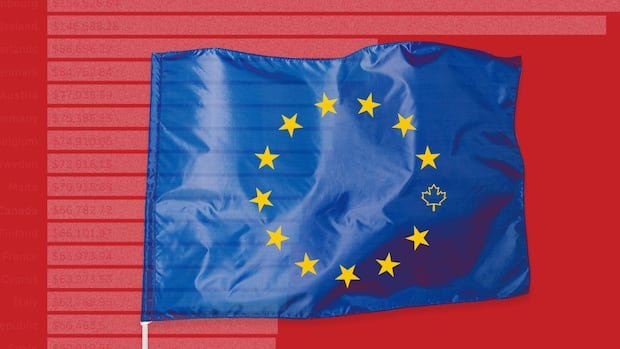

The European Union is eyeing Canada to potentially become its first “associate member” among the 27-member bloc, as many nations globally look to expand trade partnerships beyond the United States.
During a state of the union address, European Commission President Ursula von der Leyen emphasized the need for the EU and Canada to reenvision their partnership beyond a mere free-trade agreement.
Prime Minister Mark Carney expressed support for closer ties in his speech, highlighting Canada’s pursuit of resilience and sovereignty. He proposed enhancing integration in critical sectors such as artificial intelligence, energy, defense, research, and finance.
Carney stressed the importance of sovereignty, emphasizing the need for resilience in the face of challenges. While the designation of “associate member” is not currently recognized under EU rules, Canada aims to bolster its trade relations with Europe.
Analyzing Canada’s economic standing compared to potential European peers, the GDP per capita showcases Canada in a favorable position within the EU, surpassing countries like France, Italy, and Spain. Despite not being an EU member, Canada’s performance aligns with several EU nations, with some non-EU countries like Australia and Iceland outperforming Canada.
In terms of inflation, Canada stood out positively compared to many EU members, with a lower inflation rate in 2025 and better resilience during the pandemic. Meanwhile, the eurozone is grappling with high energy prices due to ongoing conflicts in the Middle East and Europe.
When examining the total debt-to-GDP ratio, Canada’s position appears less favorable, ranking among the highest if it were an EU member, following France, Italy, and Greece. The International Monetary Fund has urged Canada to prioritize reducing this ratio in fiscal planning.
Canada’s trade relationship with the EU is robust, with significant imports and exports recorded between the two entities. Germany plays a central role in the trade partnership, with Canada importing machinery, vehicles, and pharmaceuticals, and exporting energy products, ore, and precious metals.
In conclusion, while the status of “associate member” remains uncertain, Canada’s potential integration with the EU could lead to strengthened economic ties.