
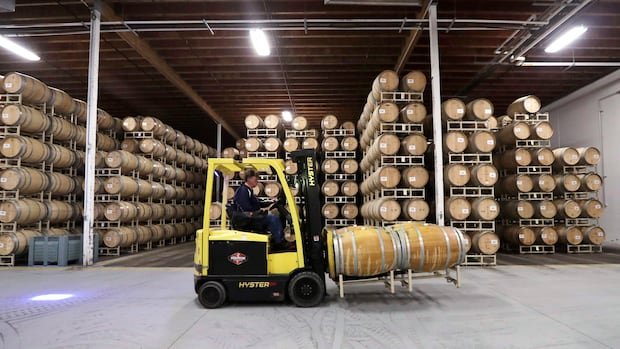

As the Victoria Day long weekend approaches, a significant period for alcohol sales, Canadians find themselves in the second year without access to American liquor brands. The removal of American products from Canadian liquor store shelves in early 2025 had a substantial negative impact on the U.S. wine industry. Recent data indicates a drastic decline of $343 million US in wine exports from the U.S. to Canada between 2024 and 2025, representing a sharp 77% year-over-year decrease.
Since March 2025, American alcoholic beverages have been notably absent from most liquor stores nationwide in response to tariffs imposed by U.S. President Donald Trump. Exceptions exist in Alberta and Saskatchewan, where limited sales have resumed due to liquor store privatization in those provinces.
A recently released report highlighted the U.S. government’s concerns regarding the alcohol ban as a key issue for upcoming trade discussions with Canada. Other contentious topics mentioned in the report include supply management, procurement policies, and the Digital Services Tax.
Following Canada, the most substantial drop in U.S. wine exports occurred in China, amounting to a $69 million US decline. The data illustrates how Canada’s actions have significantly impacted global wine trade. While U.S. winemakers have explored alternative markets like South Africa, Belgium, Japan, and the United Arab Emirates, the surge in exports to these countries has not been sufficient to offset the substantial losses incurred elsewhere.
Apart from the trade disputes, the U.S. wine industry faces challenges from a shrinking market due to the rising popularity of ready-to-drink cocktails and seltzers. Additionally, changing consumer preferences and concerns about the health implications of alcohol consumption have contributed to a decline in overall sales.
In the realm of spirits and beer, American liquor exports to Canada have dwindled, while imports of Canadian spirits, including whiskies and ready-to-drink cocktails, have surged. The beer trade had been declining even before the trade war, coinciding with the rise of microbreweries as consumers favored local beer producers over multinational brands.
While the alcohol ban may serve as a strategic tool in trade negotiations, both Canada and the U.S. are experiencing economic repercussions. Notably, the LCBO in Ontario reported a significant revenue decline, partly attributed to the loss of high-margin American liquor sales. Nevertheless, this void has led to a surge in domestic wine sales, particularly Ontario VQA wines.
The trade tensions have impacted various states in the U.S., affecting California’s wine industry and diminishing bourbon and whisky exports from Tennessee and Kentucky. As the U.S. approaches a crucial midterm election phase, the Canada-U.S.-Mexico Agreement on trade (CUSMA) is under review this year, with a July 1 deadline for all three countries to approve a renewal or signal intentions to exit the pact. However, Canadian trade negotiators view this date more as a checkpoint than a strict deadline.