
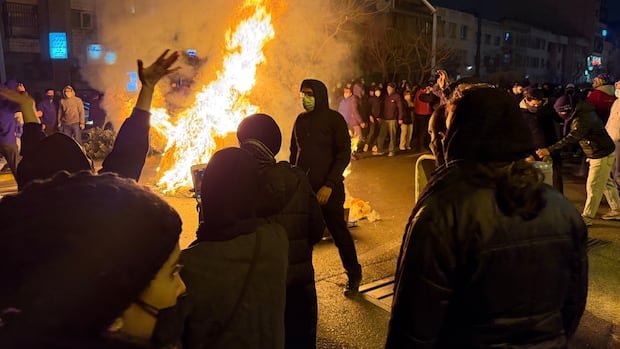

Following a period of disrupted internet services in Iran, accurate coverage of the ongoing protests has been challenging. However, with the restoration of some communication channels on Tuesday, The Associated Press managed to speak with individuals in the country who were both witnessing and participating in the demonstrations.
The protests began slightly over two weeks ago fueled by frustrations over Iran’s struggling economy, eventually turning towards the theocracy, particularly targeting 86-year-old Supreme Leader Ayatollah Ali Khamenei. Images captured on Tuesday in Tehran during the demonstrations showcased graffiti and chants advocating for Khamenei’s demise, an act punishable by death.
Skylar Thompson from the Human Rights Activists News Agency (HRANA) expressed astonishment at the reported death toll exceeding 2,000 individuals linked to the protests, a number four times higher than the Mahsa Amini protests in 2022 that lasted for months, all occurring within a mere two weeks. Thompson cautioned that the death toll was likely to increase, stating, “We’re horrified, but we still think the number is conservative.” Later on, HRANA updated the death toll to at least 2,571.
Despite the challenges, individuals in Tehran managed to reach out to AP journalists on Tuesday, providing accounts of a heavy security presence in central Tehran, including reports of damaged government buildings and ATMs. A taxi driver named Reza mentioned the prevalent despair among the populace, especially the youth, but noted discussions about continuing the protests.
Multiple witnesses described a heavily militarized environment, with anti-riot police equipped with protective gear and weapons while stationed at key locations. Additionally, members of the Revolutionary Guard’s Basij force were seen armed with firearms and batons, along with plainclothes security personnel monitoring public areas.
Witnesses disclosed incidents of burned banks and government offices during the unrest, highlighting the challenges in conducting transactions without internet access. Despite the unrest, shops reopened in Tehran, including the Grand Bazaar which saw the initial protests over the currency devaluation on December 28. Shopkeepers, under pressure from security forces, resumed operations, though Iranian state media did not acknowledge any official orders.
Concerns mounted among the population about potential future developments, including fears of a U.S. intervention following President Donald Trump’s threats in response to Iran’s crackdown on protesters. Anecdotes from a shopkeeper named Mahmoud reflected these apprehensions, emphasizing skepticism about foreign intervention benefiting Iranians.
Reports emerged of security authorities searching for Starlink terminals in northern Tehran, leading to raids on buildings with satellite dishes. Despite the illegality of satellite TV dishes, enforcement had been lax in recent years. Notably, a Los Angeles-based activist revealed that Starlink was offering free internet service in Iran from Wednesday morning, confirmed by other activists online.
In response to the unrest, Khamenei praised the extensive participation in pro-government rallies nationwide, viewed as a strong message against perceived external interference. State TV coverage showcased massive crowds chanting anti-American and anti-Israeli slogans, emphasizing the nation’s resilience against external adversaries.