
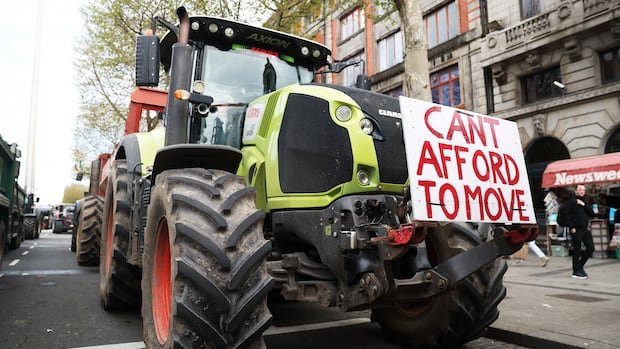

Irish Prime Minister Micheal Martin announced on Sunday that his administration will introduce new fuel tax reductions in an effort to quell disruptive protests triggered by surging gasoline prices. While criticizing the tactics employed by farmers and truckers who had blockaded the nation’s sole oil refinery and multiple depots, Martin detailed a 505 million euros ($819 million Cdn) relief package to alleviate the mounting cost-of-living pressures exacerbated by the closure of the Strait of Hormuz following the U.S.-Israel conflict with Iran. This proposed measure, requiring parliamentary approval, would supplement a previously sanctioned 250 million euro ($405 million Cdn) tax relief.
The potential impact of this initiative on defusing the protests remains uncertain, although demonstrations showed signs of abating on Sunday amidst a crackdown by law enforcement. The blockades, spanning six days, wreaked havoc as they impeded the delivery of fuel by tanker trucks to gas stations, resulting in fuel shortages and traffic congestion on major highways. Martin highlighted the imminent risk of oil tankers being redirected to other countries and the shutdown of the nation’s refinery.
Police intervention intensified on Saturday, with officers dispersing protesters, including farmers and truckers, from the Whitegate refinery in County Cork. Authorities also cleared blockades on O’Connell Street in Dublin and clashed with demonstrators at the Galway docks. Some protesters voluntarily ended their actions at fuel depots, signaling a potential easing of tensions.
The protests, initiated on social media, drew participation from various sectors, including truckers, farmers, and transport operators, demanding government intervention such as price caps or tax reductions to mitigate escalating fuel costs. Officials expressed bewilderment over the protests, attributing the global surge in oil prices to geopolitical unrest in the Middle East.
Despite over a third of gas stations running dry by Saturday, the reopening of the refinery and the clearance of blockades at fuel depots are expected to alleviate shortages, although a full recovery may take up to 10 days. The government, amidst mounting political pressure, convened a rare Sunday cabinet meeting to finalize relief measures in response to the crisis.
The coalition government faces criticism from opposition parties, with Sinn Fein indicating plans to propose a vote of no confidence and the Social Democrats expressing support for the motion. Sinn Fein Leader Mary Lou McDonald criticized the government for its handling of the crisis, emphasizing the public’s lack of confidence in its response.