
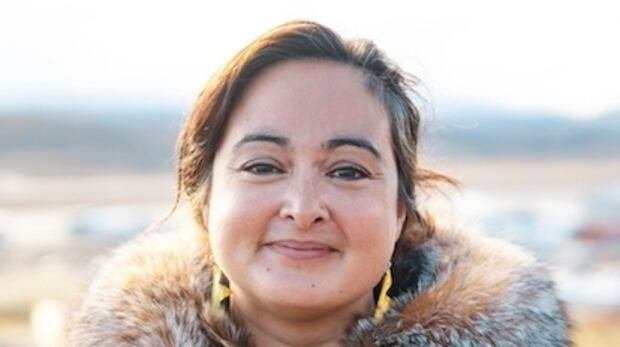

Even before assuming her new role as Nunavut’s Minister of Family Services, Gwen Healey Akearok actively followed the Office of the Auditor General’s (OAG) hearings regarding the state of the Family Services department. Being one of the founders of the Qaujigiartiit Health Research Centre, she engaged as a researcher and personally witnessed the various issues within the department.
The Family Services department has faced critical reviews by the OAG since 2011. The most recent report, published in March this year, highlighted a lack of improvement by the department in addressing the care provided to vulnerable children and youth.
Healey Akearok is well-informed about the challenges ahead. While refraining from making grand commitments at this stage, she emphasized her dedication to learning and listening, interacting with frontline staff, engaging with communities, and striving for enhanced outcomes for children.
Jane Bates, Nunavut’s representative for children and youth, expressed optimism about the new leadership but emphasized the necessity for clear standards and procedures for children under care. As of March 2025, there were 444 children in Nunavut receiving family services from the government, with an additional 89 outside the territory, a significant number given Nunavut’s population size.
Acknowledging concerns raised, Healey Akearok pointed to the Ilagiitsiarniq Strategic Action Plan 2023-2028 as a roadmap for transparency and accountability. The plan is grounded in the philosophy of Inunnguiniq, supporting Inuit children from infancy to adulthood to foster their capabilities.
However, the OAG’s 2025 report critiqued the plan for lacking specific targets, baselines for measuring progress, clear timelines, and accountabilities.
Margaret Hollis, a researcher at Amautiit Nunavut Inuit Women’s Association, emphasized the significance of addressing poverty as a factor contributing to children entering state care. She highlighted the income assistance regulations, inherited from the Northwest Territories, which could lead to support termination for individuals not participating in designated activities.
Healey Akearok concurred that a review of the income assistance regulations is warranted due to their outdated nature. Jeneca Fanjoy, Executive Director of Qupanuaq, stressed the challenges families face in accessing needed support due to limited information availability and inconsistencies in service delivery.
Fanjoy advocated for increased government funding to ensure children have access to essential needs, citing the high food insecurity rates in Nunavut reported by Statistics Canada.
In her annual report, Bates highlighted concerning trends in child abuse cases, with 1,573 referrals for harm or neglect reported. She emphasized the importance of prevention, collaborative efforts, mental health services, and addressing social determinants to safeguard children’s well-being.
Bates expressed hope that the new territorial government would prioritize the needs of young Nunavummiut, stressing the critical role this plays in their survival.