
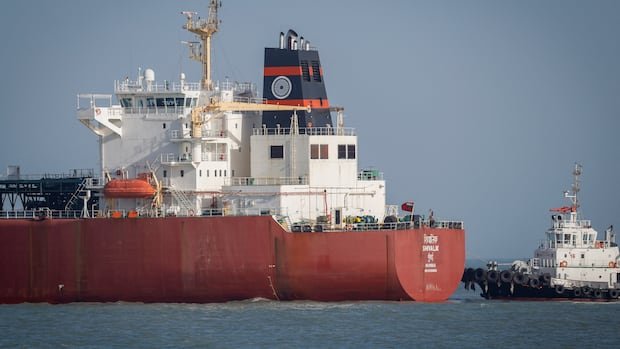

The Strait of Hormuz has witnessed a significant decrease in marine traffic, with Iran allowing only a limited number of ships to pass from non-aligned countries amid ongoing warfare. Data on marine traffic reveals a sharp decline in the number of vessels transiting through the vital waterway since the conflict began, as fears of attacks have deterred many ships.
Iran’s aggressive actions in the Persian Gulf, including attacks on shipping and threats of further aggression, have led to the stranding of numerous vessels and thousands of seafarers. This has effectively halted energy exports, impacting the flow of crude oil from Saudi Arabia and liquefied natural gas from Qatar.
Prior to the conflict, an estimated 151 ships traversed the strait daily in February, according to UN Trade and Development figures. However, since the onset of hostilities, this number has dwindled significantly to only four or five ships a day, as noted by Jonathan Schroden, Chief Research Officer at the U.S.-based Center for Naval Analyses.
Recent marine traffic patterns indicate that traffic has mainly involved Iranian oil tankers leaving the region and bulk carriers arriving in Iran with various commodities. Some ships have resorted to turning off their tracking systems while navigating through the strait, making it challenging to ascertain the exact vessels passing through the area.
It has been observed that select ships, including those associated with Pakistan, have successfully navigated alternative routes outside the usual shipping lanes in the strait. This suggests that negotiations for safe passage are being conducted directly with Iran, guiding these vessels through a secure path.
Iran has explicitly stated that only certain vessels will be permitted to pass through the strait, with a clear distinction made between ships linked to hostile countries and those from non-aligned nations like Pakistan, China, and India. Reports indicate that over 20 vessels have followed a “Tehran-approved route” to transit the strait, while tankers have been observed stopping at Qeshm Island for clearance procedures.
The ongoing conflict has highlighted Iran’s exertion of control over the strait, raising concerns within the shipping industry and governments about the vulnerability of this critical maritime route. Despite threats from U.S. President Donald Trump to intervene if Iran does not ease its grip on the strait, diplomatic efforts are underway to seek a resolution and bring an end to the conflict.