
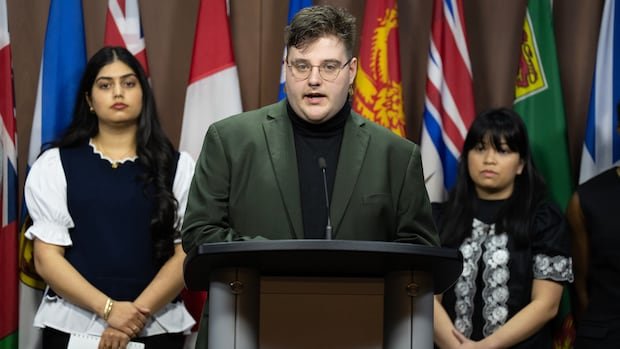

Youth advocates are urging the federal government to recognize online safety as a human rights issue, stating that current systems are inadequate. During a press conference on Parliament Hill, representatives from the John Humphrey Centre for Peace and Human Rights shared their expectations for future legislative actions by Ottawa.
The most recent government effort to address harmful online behavior, Bill C-63, stalled in Parliament due to prorogation last year. Advocates are emphasizing the importance of involving young people in consultations before reintroducing any online harms legislation.
Highlighting the impact of online harm beyond the digital realm, advocate Kamalavasani Karunakaran stated that issues persist in schools, workplaces, and mental health due to online harm. The Youth Digital Rights Blueprint by the center reveals that young Canadians felt excluded from the development of Bill C-63, facing challenges like inaccessible language and tokenization instead of empowerment.
The report identifies the risks young people face online, emphasizing gender- and identity-based violence, privacy exploitation, and mental health concerns in loosely regulated digital spaces. It calls for a digital safety framework aligned with international standards and Canada’s obligations under the UN Convention on the Rights of the Child.
Advocating for clear federal action, youth representative Blue Vetsch stressed the need for practical steps to address online safety issues effectively. Justice Minister Sean Fraser previously mentioned a reevaluation of the government’s online harms legislation.
The report’s recommendations include establishing a national youth digital safety advisory council and creating permanent youth liaison roles within federal departments to represent diverse youth experiences. It also suggests increased investment in youth-led research focused on digital rights, AI ethics, platform accountability, and online harm prevention.
Emphasizing the importance of involving youth in policy-making, the report highlights that engaging young people in consultations leads to more sustainable policies. The call to action aligns with recent actions in Australia and France, where social media bans for specific age groups have been implemented to address concerns of addiction and harm among children and young teens.
Advocate Fea Jerulen Gelvezon urged meaningful collaboration with young people early in the legislative process, rather than as an afterthought or token gesture. The report underscores the significance of actively involving youth in shaping online safety laws and policies.