
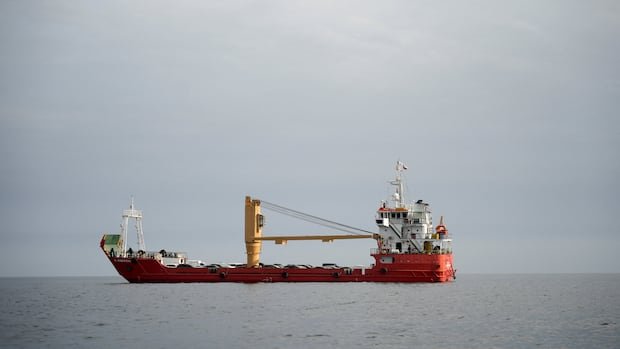

President Trump announced on Sunday that the United States would initiate a blockade in the Strait of Hormuz following unsuccessful negotiations with Iran to end the ongoing conflict. The U.S. Central Command confirmed that the blockade would commence at 10 a.m. ET on Monday, applying to all vessels entering or leaving Iranian ports.
The blockade will be enforced without bias against ships from any nation accessing Iranian ports in the Arabian Gulf and Gulf of Oman. However, it will not obstruct the passage of non-Iranian vessels through the Strait of Hormuz. Commercial mariners will receive detailed instructions ahead of the blockade’s enforcement.
In response to Iran’s actions, President Trump stated on social media that any vessel paying fees to Iran in international waters would face repercussions. He also mentioned the removal of mines allegedly placed by Iran in the strait, a critical route for global energy supplies that Iran has obstructed.
Iran’s Revolutionary Guards warned that approaching military vessels in the Strait would violate the ceasefire and prompt severe consequences. Iranian officials dismissed Trump’s threats, emphasizing a preference for logical dialogue over conflict.
Efforts to negotiate a ceasefire between the U.S. and Iran faltered, with both sides blaming each other for the breakdown. Despite offering proposals, Iran criticized the U.S. for lacking trust, while U.S. Vice-President JD Vance noted Iran’s refusal to agree to American terms, including nuclear disarmament.
The talks, the first direct meeting in over a decade and the highest-level discussions since the 1979 Islamic Revolution, ended without an agreement. Trump expressed optimism about continued negotiations with Iran, despite the tensions.
Tehran’s demands include control of the Strait of Hormuz, war reparations, regional ceasefires, and access to frozen assets abroad. On the other hand, Trump aims to maintain open shipping lanes in the strait and halt Iran’s nuclear activities to prevent weapon development.
Amid ongoing conflicts, maintaining the ceasefire is crucial, according to Pakistani and Israeli officials. Israel’s military actions in Lebanon, targeting Hezbollah militants, have strained the ceasefire agreement, with Iran urging an end to the violence.
President Trump acknowledged the potential impact of the conflict on oil prices leading up to the U.S. midterm elections in November. Despite the blockade announcement, oil tankers have been able to pass through the Strait of Hormuz, while many vessels remain stranded in the Gulf awaiting passage.