

Catherine O’Brien’s acting journey unexpectedly led her to a role at a medical school. Originating in Ontario, where she worked part-time with the University of Toronto, O’Brien participated in a program that involved non-medical individuals portraying patients in simulated scenarios to aid in the training of future healthcare practitioners.
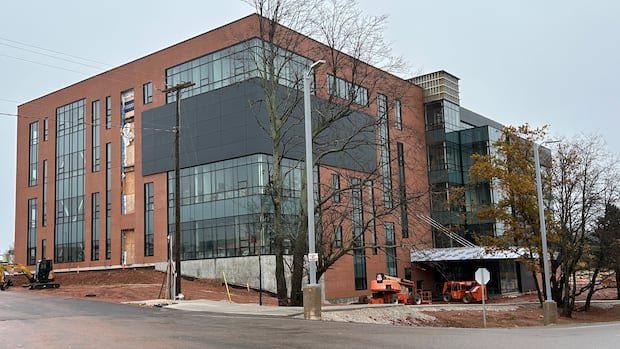
Currently, O’Brien, a renowned actor and director from Prince Edward Island (P.E.I.), continues her involvement in a similar capacity at the University of Prince Edward Island’s (UPEI) newly established medical school. At UPEI’s Clinical Learning and Simulation Centre (CLSC), she serves as a standardized patient, enacting scripted roles to assist students in honing their skills within realistic settings.
The standardized patient team at the CLSC comprises individuals from diverse backgrounds, not solely actors, to create a safe learning environment for students. By engaging with standardized patients like O’Brien, students learn essential interviewing techniques, question formulation, and patient empathy.
Paul Charles, the simulation program manager at the centre, emphasized that apart from utilizing standardized patients, the program integrates various tools to replicate real clinical settings. These tools include simulation rooms resembling hospital environments, equipped with medication carts and vital monitoring devices. Additionally, high-fidelity manikins capable of simulating various medical conditions are used to bridge the gap between theoretical education and practical experience.
The training initiatives extend beyond students to encompass healthcare professionals seeking to enhance their competencies. Tammie Muise, the centre’s director, highlighted the introduction of a “simulation rig,” designed to deliver training directly in authentic healthcare settings. The simulation rig, housed inside a trailer configured as an ambulance interior, facilitates realistic scenarios such as emergency response situations like strokes or heart attacks, emphasizing the critical nature of timely interventions.
O’Brien has already interacted with the inaugural cohort of students at the medical school during their orientation, expressing enthusiasm for future training sessions. Collaborating with the students in upcoming sessions, she eagerly anticipates the hands-on learning experiences ahead.