
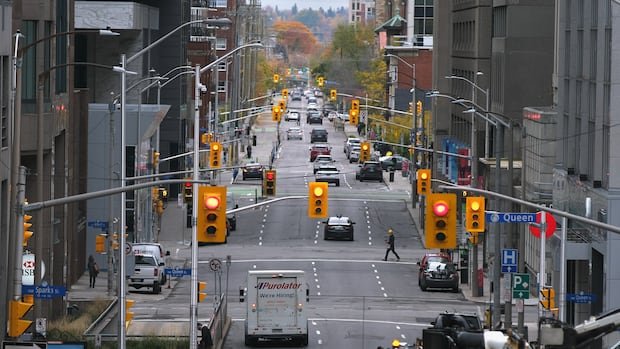

A brief moment every driver is familiar with is the transition from a green to a yellow traffic light, a situation that demands rapid calculations involving distance, time, speed, and the possibility of tailgaters. These variables can lead to receiving a red-light camera ticket or, in extreme cases, a collision. The engineers responsible for programming yellow lights, even the ones that seem excessively short, emphasize the scientific basis behind traffic light timing. Jodie Marcyniuk, overseeing traffic management in Calgary, explains that the timing of amber lights and the subsequent “all red” phase adhere to established guidelines and consider factors such as vehicle speed, deceleration, road slope, and driver reaction times.
Each intersection is approached as a distinct case, with traffic engineers studying elements like topography and speed limits to determine the appropriate duration for the yellow light. Marcyniuk advises that if it’s feasible to stop when the light turns yellow, it should be done to prevent dangerous maneuvers. Travis Stocking, a senior traffic analyst in Whitby, Ontario, highlights the importance of synchronizing traffic lights to create efficient vehicle “platoons,” although real-world conditions can disrupt ideal scenarios. Additionally, elongating yellow signals excessively may inadvertently lead to rear-end collisions due to drivers misjudging the timing.
The yellow light signifies the entry into the “indecision zone,” a critical phase where drivers must decide whether to stop or proceed based on their current speed and the duration of the all-red period. Despite established rules, human behavior introduces unpredictability into driver decisions. Stocking emphasizes that drivers should view yellow lights as guidance rather than a guarantee of safe passage, underscoring the importance of attentiveness and consideration for others on the road.