

On the seventh level of the expansive Quan Ju De eatery in Beijing, a small exhibition hall pays tribute to the historical “roast duck diplomacy.” Faded monochrome images depict a jovial U.S. President Richard Nixon and Secretary of State Henry Kissinger dining with Chinese leaders, including Premier Zhou Enlai, in 1972, a pivotal meeting that normalized relations between the former Cold War foes. This exhibit serves as a poignant reminder that significant world changes can stem from American and Chinese presidents coming together over a meal.
Amidst the diplomatic and political circles of Beijing, a pressing question lingers – will the current U.S. President, Donald Trump, even attend the table? Engulfed in a self-initiated conflict in Iran and grappling with mounting domestic pressures, Trump has relegated the weighty China matter to the back burner to focus on military strategy.
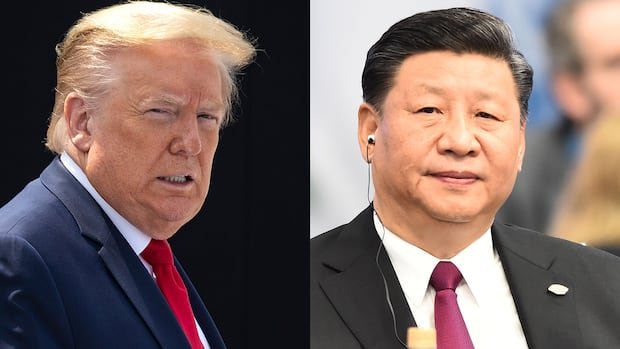
Previously, the White House had slated the China visit to commence on March 31. Despite Trump indicating to American media that the delay might only extend “a month or so,” uncertainty looms large. China’s foreign ministry has maintained brevity, stating that both sides are “in communication” regarding the timing of the summit with President Xi Jinping.
Economic analysts in Beijing suggest that predicting the visit’s occurrence remains elusive. Xiang Songzuo, a distinguished economist and professor at Renmin University School of Finance, underscored the unpredictable nature of President Trump’s decision-making, emphasizing the ever-changing landscape of U.S.-China relations.
Zichen Wang, deputy secretary general at the Center for China and Globalization, concurs that a month carries significant weight in current political dynamics, fraught with uncertainties. Beijing finds a silver lining in Trump attributing the delay to personal distractions rather than Chinese intransigence, inadvertently easing tensions between the two global powers.
The high stakes and legal obstacles surrounding the U.S.-China trade relationship came to the fore in Paris this week, where senior officials convened to lay groundwork. Reports indicate Chinese frustration over uncertainties regarding Trump’s expectations from the summit. The summit holds great significance as a potential beacon of economic stability amidst escalating trade tensions.
As the temporary truce in U.S.-China trade nears expiration in November, the Beijing summit emerges as a crucial opportunity for economic predictability. However, Trump’s delay in convening the summit risks weakening his bargaining power. Recent Supreme Court rulings deeming his national security tariffs illegal have tilted the scales in favor of Chinese exporters, prompting calls for a halt to investigations into Chinese trade practices before the summit.
The impending summit is laden with a myriad of issues for discussion, encompassing trade disputes, geopolitical concerns, and the shadow of the ongoing conflict in Iran. The outcome holds significant implications for global energy dynamics and trade relationships, with Canada also closely monitoring the developments for potential impacts on its trade negotiations with China.
As the potential summit at Quan Ju De hangs in limbo, the absence of the esteemed guests underscores the uncertainty surrounding the future trajectory of U.S.-China relations.