
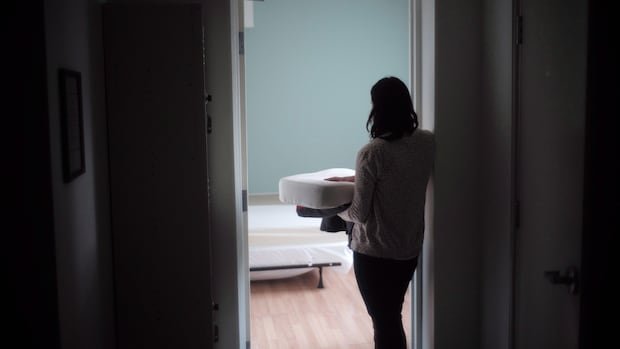

Women and children in New Brunswick who are escaping domestic violence are finding themselves staying in emergency shelters for extended periods due to financial constraints that prevent them from securing their own safe accommodations. Renee Charron, the executive director of Crossroads for Women, which is the primary transitional housing service for women in the region, highlighted the severity of the situation, emphasizing that lives are at risk.
The purpose of transitional housing at Crossroads for Women is to offer a temporary safe haven for women in crisis until they can secure permanent housing. However, the limited availability of affordable housing options has led to more women being placed in the organization’s subsidized housing units, which are also quickly reaching their capacity.
In the past, Crossroads for Women used to consistently fill its 17 emergency beds, but now, with an expanded capacity of 41 beds, the shelter often operates at full capacity, necessitating the referral of women to other emergency shelters like Serenity House in Kent County, which can accommodate 10 women.
Valerie Roy-Lang, the associate director at the Violence Prevention Centre for Kent County, noted the challenges faced by women in finding affordable housing in the area, leading them to sometimes relocate far away due to limited options and financial constraints.
While the recent increase in provincial funding has enabled the Violence Prevention Centre to hire staff to care for children in emergency shelters while their mothers receive counseling, Charron and Roy-Lang emphasized that more resources are needed to address the growing demand for services in the region.
The provincial government injected $9.2 million into the Department of Women’s Equality budget to support organizations combatting gender-based violence, following the declaration of the issue as an epidemic in New Brunswick. Despite the recent funding boost, Charron expressed disappointment that women’s shelters in the area continue to face the same challenges of limited capacity and resources.
Transitional housing programs are receiving $4.6 million from the provincial budget increase, allowing organizations like Crossroads for Women to improve staff wages, sustain operations, and procure essential supplies. However, further action is needed to address the systemic issues contributing to the shortage of shelter spaces and affordable housing options for women and children fleeing domestic violence.