
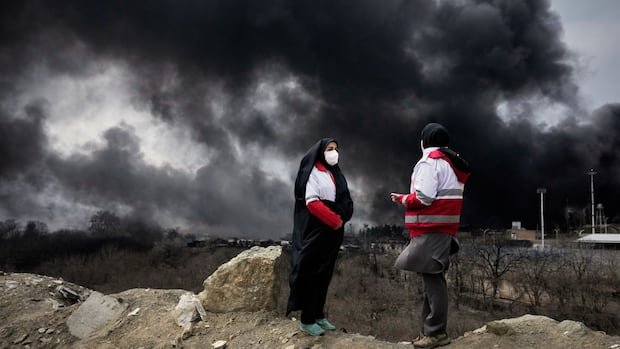

Scientists have warned of severe health and environmental repercussions following Israeli airstrikes on oil depots in and around Tehran. The aftermath of the strikes has raised concerns about long-term impacts on water and food sources even after the smoke and black rain dissipate.
The World Health Organization (WHO) issued an alert on Tuesday regarding toxic pollutants in the air following the Saturday attacks on four oil storage facilities and an oil production transfer center. The strikes triggered massive flames and thick, black clouds that later resulted in black, oily rain, causing residents in the densely populated city of 10 million to struggle with breathing difficulties, dizziness, and burning sensations.
WHO spokesperson Christian Lindmeier emphasized the respiratory dangers posed by the black rain and acidic components, urging caution among the population. The UN health agency has received numerous reports of black rain post-attacks and is supporting Iran’s advisory for people to stay indoors to minimize exposure risks.
Concerns were raised by Peter Ross, a pollution expert, about the toxic nature of petroleum mixtures, highlighting the presence of hazardous compounds like benzene. Ross emphasized the potential for severe long-term consequences from inhaling toxic gases dispersed into the atmosphere during fires, which can lead to unconsciousness or even fatalities.
The explosions’ downstream impact on vulnerable populations, particularly in terms of public health, drinking water safety, fisheries, and agriculture, was underscored by Ross. Drawing parallels to the 1991 Kuwaiti oil fires during the Gulf War, concerns were raised about similar respiratory issues, environmental damage, and long-term health effects from the current situation in Tehran.
The UN is closely monitoring the health risks associated with the significant release of toxic compounds into the air, including hydrocarbons and sulphur oxides. Criticism of the attacks as an environmental crime and intentional chemical warfare was voiced by Iranian officials, while the Israeli Defense Forces defended the strikes as targeting fuel storage facilities linked to Iran’s military operations.
The environmental fallout from the conflict has extended regionally and internationally, with incidents of environmental risks being tracked by organizations. Concerns persist about the unknown effects of the explosions and the potential chronic exposure to toxic compounds present in the aftermath of the airstrikes.