
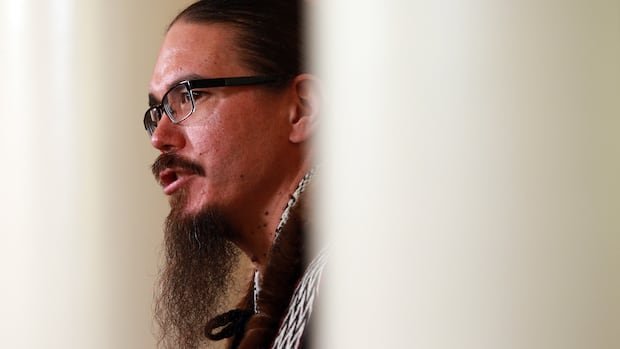

A group of Indigenous leaders from British Columbia has traveled to Calgary to deliver a direct message to pipeline executives: avoid investing in a new bitumen pipeline to the northwest coast or face a prolonged legal battle. Haida Nation President Jason Alsop, known as Gaagwiis, emphasized the importance of protecting the ocean and food security, stating that crude tankers in northern B.C. waters would jeopardize these resources. The leaders are committed to utilizing all available means to fulfill their responsibility, making investment in a pipeline to the north coast a substantial legal and financial risk.
Chief councillor Arnold Clifton of the Gitga’at First Nation referenced the successful opposition against Enbridge Inc.’s Northern Gateway proposal a decade ago, highlighting the strengthened unity and determination of northern B.C. communities to resist any similar projects in the future. The delegation held meetings with senior executives from Pembina Pipeline Corp. and Trans Mountain Corp. in Calgary, where discussions emphasized the environmental risks and legal challenges associated with a new oil pipeline in British Columbia.
While Pembina Pipeline is focused on natural gas transportation and has not shown interest in a bitumen pipeline, Trans Mountain, a Crown corporation, has been advising the Alberta government on potential oil pipeline developments but is currently concentrating on expanding existing infrastructure. The First Nations group extended invitations to other pipeline companies and warned them of the risks involved in supporting a B.C. oil pipeline.
The Alberta government is looking to submit a proposal to the federal major projects office for a B.C. pipeline, aiming to reduce project risks for private-sector involvement. A recent energy accord between the Alberta and federal governments outlines plans for a new B.C. pipeline combined with a significant carbon capture and storage project in Alberta. The proposed pipeline, potentially ending in Prince Rupert, B.C., requires legislative changes to accommodate a new oil tanker port on the northern B.C. coast.
Hereditary Chief Darin Swanson of the Haida Nation emphasized the pristine nature of their beaches and the importance of preserving the local ecosystem, stating that no amount of money or job creation would justify the risks associated with a bitumen pipeline and tanker port. The Indigenous leaders are resolute in their stance against such projects, prioritizing environmental conservation over economic gains.