
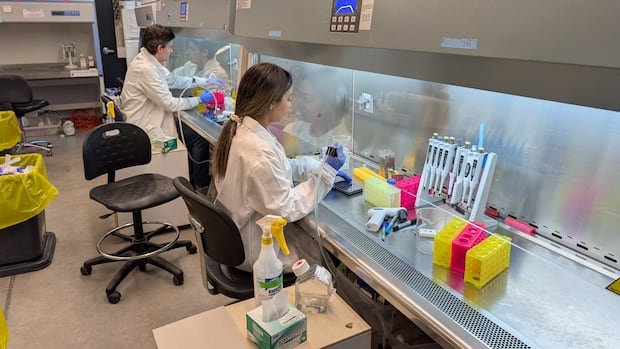

A pivotal moment led Charu Chandrasekera to reconsider her career path as a biomedical researcher. Observing her father’s health struggles after needing a quadruple bypass, she questioned the effectiveness of her work utilizing animal testing in studying heart failure. Research indicates that the outcomes derived from animal testing often do not translate to success in human trials, with around 90% of drugs deemed safe and effective in animals failing in human testing.
In response to this realization, Chandrasekera shifted her focus to developing alternatives to animal testing. She established the Canadian Centre for Alternatives to Animal Methods at the University of Windsor in 2017, pioneering technologies such as 3D bioprinted tissues made from human cells. These advancements allowed for monitoring health changes in a controlled environment rather than relying on animal models.
Despite the impact of her work in reshaping the discourse around animal testing in Canada, Chandrasekera faced setbacks due to insufficient funding, leading to the closure of her lab in 2024. While countries like the U.K., the U.S., and the European Union have allocated resources and outlined plans to phase out animal testing in research, Canada lacks a comprehensive strategy for replacing animals used in biomedical testing, which constitute a significant portion of the millions of animals utilized annually for research purposes in the country.
Experts like Chandrasekera emphasize the growing momentum towards transitioning away from animal testing, driven by the potential for a booming industry estimated to reach $30 billion by 2030. Innovative technologies like organ-on-a-chip systems, in-vitro methods, and AI models are emerging as promising alternatives, aiming to revolutionize biomedical research practices.
While some researchers remain cautious about completely discontinuing animal testing due to its historical significance in scientific inquiry, advocates for alternative methods stress the need for a collaborative effort to advance research ethically and effectively. The role of regulators, such as the Canadian Council on Animal Care, in overseeing the adoption of alternative methods is pivotal in ensuring scientific rigor while minimizing reliance on animal models.
In light of global initiatives investing in animal alternatives for drug development, including substantial funding from agencies like the U.S. FDA and the NIH, Canada lags behind in allocating resources for this transition. The absence of financial support for alternative methods poses a challenge for researchers like Chandrasekera, who may consider relocating to pursue their innovations in countries with more robust funding frameworks.
The call for Canada to take a proactive stance in driving the shift towards non-animal testing methods resonates strongly with advocates like Chandrasekera, underscoring the urgency of addressing the current gaps in funding and strategic planning to propel the research landscape towards a more ethical and efficient future.