

A decision by the Supreme Court to invalidate President Donald Trump’s utilization of the 1977 International Emergency Economic Powers Act, known as IEEPA, to enforce extensive global tariffs would remove a key tool used to penalize countries that provoke his displeasure on non-trade political issues.
The court, with a 6-3 conservative majority including three justices appointed by Trump during his initial term, is set to address the challenge initiated by small business associations and various states on Wednesday. The timing of the court’s verdict remains uncertain.
Trump became the first president to invoke this legislation, typically employed for imposing punitive economic sanctions on adversaries, to levy tariffs.
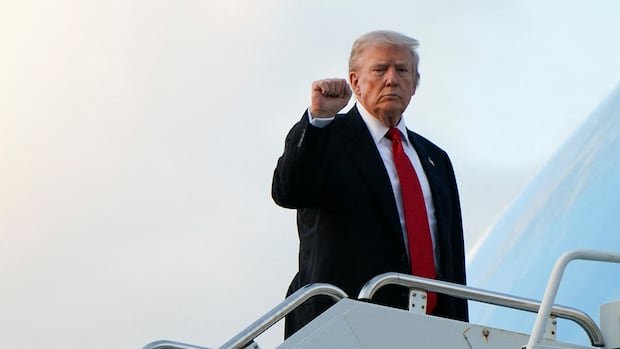
Uncertainty surrounds the future of trade talks between Canada and the U.S. as the Trump administration’s trade strategy heads to the Supreme Court and the treasury secretary says President Donald Trump’s latest tariff threat may not become a reality.
This law grants the president authority to address “an unusual and extraordinary threat” to U.S. national security, foreign policy, or economy. Historically, it has been used to impose sanctions on adversaries or freeze assets, notably after the September 11, 2001, attacks on the United States.
In this instance, Trump declared a $1.2 trillion U.S. goods trade deficit in 2024 as a national emergency, despite the United States consistently running trade deficits since 1975.
Trump has criticized, at times using strong and violent language, other countries for exploiting the U.S. in trade. The court case holds significant importance for him, as he even considered attending the oral arguments (although he decided against it).
Various statutes permit tariffs
U.S. Treasury Secretary Scott Bessent anticipates the Supreme Court will uphold the IEEPA-based tariffs. However, if the court strikes down these tariffs, Bessent mentioned in an interview that the administration would transition to other tariff authorizations.
These include Section 122 of the Trade Act of 1974, enabling the imposition of broad 15% tariffs for 150 days to address trade imbalances.