
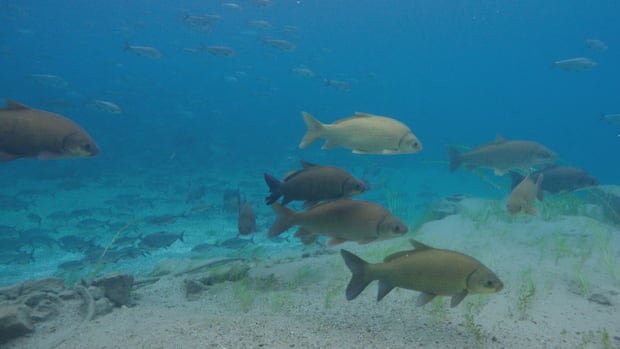

A recent documentary showcased vibrant underwater scenes in Lake Huron, referring to a specific area as “fish city” due to the abundance of fish. However, the Saugeen Ojibway Nation (SON) disputes this notion, labeling the location as a “fish trap” rather than a thriving ecosystem.
SON highlights the deaths of millions of gizzard shad in 2025 near the Bruce Nuclear Generating Station, as reported by the Department of Fisheries and Oceans (DFO) in a Canadian Nuclear Safety Commission regulatory document. The incident occurred when an influx of fish obstructed the station’s cooling water intake systems, leading to the shutdown of one unit.
In addition, SON mentions the plight of lake sturgeon, a culturally significant and endangered species, some of which became stranded at the plant. While one sturgeon was rescued, three remain in the forebay pond.
The debate over the perception of “fish city” raises concerns about how Bruce Power manages environmental risks as it pursues regulatory approval to increase plant capacities for higher electricity output.
The warm-water outflow from the Bruce Nuclear Generating Station attracts fish due to its temperature difference from the surrounding lake. SON biologist Ryan Lauzon explains that fish are lured by the warmth and food availability, with some becoming trapped in the plant’s systems.
Bruce Power refutes claims that the plant caused the 2025 fish die-off, attributing it to environmental factors and harsh winter conditions. The utility implemented various deterrent measures and monitoring systems to prevent future incidents.
Bruce Power has sought permission to boost electricity generation from its existing reactors, aiming for an 11% increase by 2030. This request is under review, with the final decision expected in July 2026.
Concerns arise from the lack of clear benchmarks for assessing fish deaths near the plant, as highlighted in a 2024 report. The absence of defined thresholds complicates the evaluation of environmental risks associated with the plant’s operation.
Local stakeholders emphasize the ecological and cultural significance of fish in Lake Huron, stressing the impact of gizzard shad deaths on the ecosystem. The loss of these fish affects the food chain and cultural practices within indigenous communities, warranting a nuanced approach to conservation efforts.