
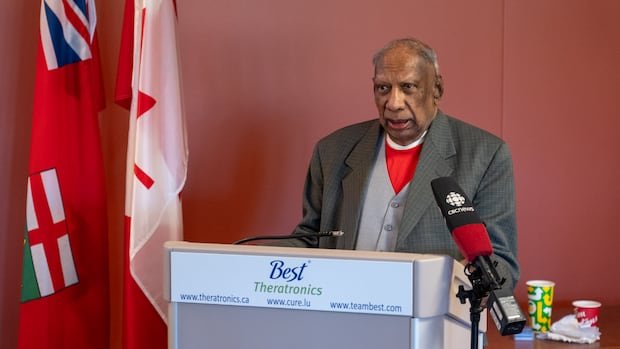

The owner of a medical manufacturing company in Ottawa has stated that he lacks the financial means to adhere to Canada’s nuclear regulatory requirements. Best Theratronics, a manufacturer specializing in cancer treatment devices utilizing Cobalt-60 radioactive isotopes, was issued two orders by the Canadian Nuclear Safety Commission (CNSC) in November 2024.
One of the orders was due to safety concerns at the company’s closed plant during a labor dispute with striking workers, while the other mandated Best Theratronics to secure a $1.8-million financial guarantee for potential decommissioning costs. Despite nearly a year passing since the orders were issued, owner Krishnan Suthanthiran asserts that he cannot afford to meet the CNSC’s demands, claiming that banks are unwilling to provide loans and threatening to relocate operations to India or the United States.
Suthanthiran criticized the financial guarantee imposed by the CNSC as excessively burdensome and accused the commission of violating its own regulations. The CNSC confirmed that Best Theratronics is still non-compliant with its nuclear license, but did not disclose the actions it intends to take for enforcement.
Green Party Leader Elizabeth May criticized Suthanthiran for undermining the CNSC and alleged the commission’s close ties to the nuclear industry. May suggested that Best Theratronics should not be permitted to continue operating with a license.
Formerly a division of Crown corporation Atomic Energy of Canada, Best Theratronics, before being acquired by Suthanthiran in 2008, has a history of producing cobalt-based cancer therapy systems. Suthanthiran, who has faced legal issues in Belgium regarding financial matters, disclosed plans to cease nuclear-licensed manufacturing in Canada and indicated that some operations might proceed in Kanata without a license.
Suthanthiran expressed challenges in recruiting qualified personnel following the strike that led to a significant workforce reduction. The company, which previously had around 200 employees, now only has approximately 60 employees, with difficulties in finding skilled workers, particularly machinists. Suthanthiran criticized the business environment in Canada, emphasizing the struggles in hiring and retaining staff.