
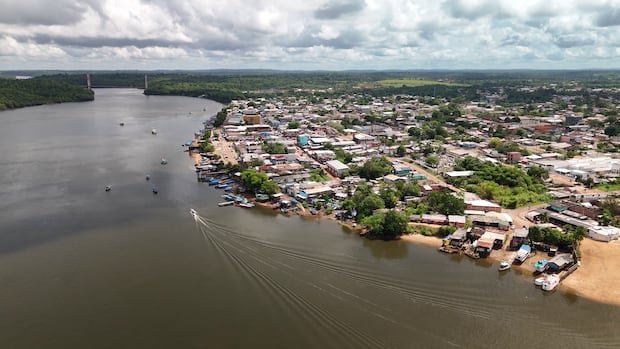

At the waterfront in Oiapoque, a city on Brazil’s northern coast, Cleidiney Ribeiro guides his boat into the river. Expressing optimism, he mentions the anticipated progress in Oiapoque as he heads towards the point where the river converges with the Atlantic Ocean.
Brazil’s state-owned oil company, Petrobras, has recently initiated exploratory drilling activities 170 kilometers off the coast of the Amazon, coinciding with the commencement of COP30, the world’s largest climate conference, in Belém. During the conference, Brazil’s president, Luiz Inácio Lula da Silva, emphasized the need to move away from the fossil fuel-centric development model due to the Earth’s inability to sustain it.
Despite such statements, Brazil stands on the brink of another potential oil boom in the Foz do Amazonas basin, a location about 500 kilometers from the Amazon River mouth. This move has raised concerns among environmental experts like Suely Araújo, who serves as the public policy coordinator at Brazil’s Climate Observatory, criticizing the decision to escalate oil production amidst the ongoing climate crisis.
As COP30 kicks off in Belém, aiming to propel actions against greenhouse gas emissions and promote the transition to sustainable energy sources, President Lula pledges to utilize a portion of the oil revenues to support this transition. However, the focus in Oiapoque, located over 1,000 kilometers north, remains fixed on the potential oil reserves that could significantly impact the region’s economic landscape.
Romeu Costa, overseeing the Oiapoque airport, envisions the transformative impact of potential oil discoveries on the city’s development, with growing real estate interest already evident. Petrobras holds the drilling rights for Block 59, the sole offshore area granted an exploratory license, while the government has auctioned 19 additional oil blocks in the Foz do Amazonas basin to companies like Exxon Mobil and Chevron.
Estimates suggest that the equatorial margin of Brazil could harbor substantial oil deposits, potentially reaching up to 30 billion barrels of recoverable oil, as highlighted by the National Agency of Petroleum, Natural Gas, and Biofuels (ANP). The country’s energy minister views this as a significant opportunity to create jobs and alleviate poverty in the region, despite concerns about the environmental impact of future drilling activities.
Indigenous communities residing near Oiapoque express apprehension over the potential risks posed by oil exploration to their territories and water sources. Chief Wagner Karipuna voices concerns about the lack of consultation regarding the oil license issuance, emphasizing the potential contamination risks to their livelihoods.
As preparations for a large protest at COP30 in Belém intensify to draw international attention to their cause, Indigenous groups and environmental advocates continue to oppose the expansion of oil exploration activities in the region. Amidst these growing tensions and conflicting interests, the debate between economic development and environmental conservation remains a pressing issue for Brazil.