
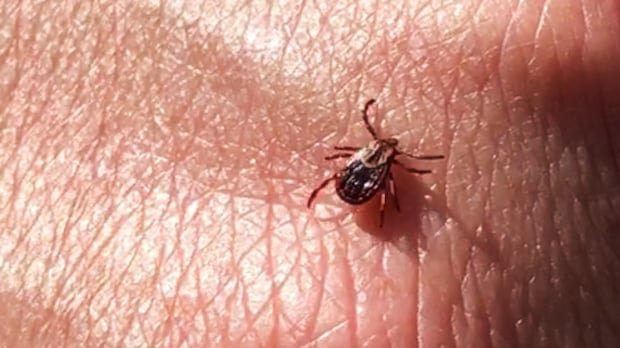

Previously, it was believed that encountering ticks was most common during peak summer and in areas with tall grasses. However, Wellington-Dufferin-Guelph Public Health now advises people to check for ticks after being outdoors when the temperature is above 0°C.
According to Phil Wong, the director of operations for health protection at the health unit, their surveillance program revealed that tick encounters are expanding beyond wooded trails based on submitted photos and information.
He highlighted three main areas where people are at risk:
- Visiting parks, trails, and camping sites with tall grass.
- Encounters at private properties and homes.
- Potential exposure for individuals working outdoors.
Wong mentioned that many people find ticks on their private properties while gardening or raking leaves, not necessarily in long grass.
Although parents need not worry about ticks on playgrounds, it is still recommended to check children for ticks once they come indoors, as ticks prefer damp areas and avoid direct sunlight.
Wellington-Dufferin-Guelph Public Health has updated its tick guidance due to the increasing local tick population and the potential rise in tick encounters. Health Canada reports over 40 tick species in Canada, with some carrying diseases such as Lyme disease.
Experts anticipate a continuous influx of ticks from the U.S., emphasizing the importance of tick awareness and prevention measures. New facilities like the Canadian Tick Research and Innovation Centre in Nova Scotia aim to enhance tick research and disease prevention efforts.
Justin Wood, the founder of Geneticks and a Lyme disease researcher, stressed the significance of early diagnosis and intervention for tick-borne diseases like Lyme disease.
Wood also mentioned that ticks do not necessarily die off during cold winters but rather hibernate in leaf litter, making year-round vigilance crucial. The public is encouraged to report ticks online to aid tracking efforts, but people are advised not to avoid outdoor activities due to tick concerns.
Despite the growing risk of encountering ticks, Wong emphasized the importance of enjoying outdoor activities while being vigilant about tick checks upon returning home.