

Marine scientists in British Columbia are optimistic about the potential of a new strategy for monitoring whale activity that is currently in use in parts of California. In San Francisco Bay, a collaboration between researchers, ferry operators, and the public is underway to enhance whale tracking efforts through the utilization of an innovative app and specialized cameras.
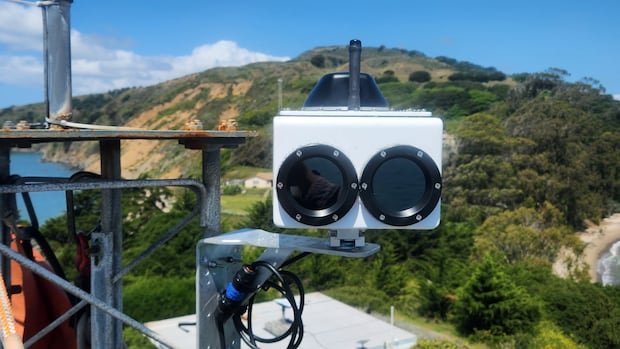
The WhaleSpotter cameras, discreetly housed in compact white boxes resembling microwaves, employ thermal imaging technology to surveil whale movements around the clock. These observations are then logged alongside human sightings in a publicly accessible app. Daniel Zitterbart, the lead scientist at WhaleSpotter, emphasized the importance of increased vigilance on the water to safeguard whales.
While WhaleSpotter cameras have been deployed on land in British Columbia, there is a lack of ferry-mounted cameras, restricting the scope of whale detection. These cameras have a detection range of approximately two nautical miles (3.7 kilometers). Tracking marine mammals is crucial for understanding their migration routes and reducing vessel collisions, a pressing concern in British Columbia due to documented incidents such as the tragic deaths of humpback whales and orcas.
In San Francisco Bay, the integration of Whale Safe, an app that connects scientists, mariners, and the public to monitor whale sightings, exemplifies community-driven conservation efforts. In contrast, in British Columbia, only authorized commercial mariners have access to camera data via the Ocean Wise whale report alert system.
Efforts are underway to expand whale monitoring initiatives, with plans to equip B.C. Ferries with detection devices to enhance real-time tracking of whale behavior and adjust maritime routes accordingly. The collaborative nature of these initiatives underscores the need for shared data and cross-border cooperation to ensure the safety of whales amidst increased ship traffic and changing environmental conditions.
The surge in grey whale sightings in the San Francisco Bay, driven by their quest for new food sources, highlights the evolving challenges faced by marine life due to climate change. The need for immediate action to mitigate vessel strikes, a global threat to whale populations, is emphasized by conservation experts like Canadian Wildlife Federation biologist Sean Brillant, who advocates for unified conservation efforts on a global scale.