
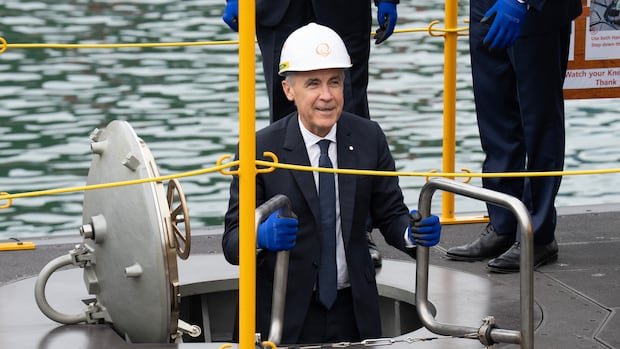

Canada’s push to replace its aging submarine fleet reaches a crucial phase as the South Korean and German shipyards face the deadline to submit formal proposals for the over $20-billion program. The federal initiative to acquire up to 12 submarines for the Royal Canadian Navy has quickly become a significant procurement battle, influencing the navy’s undersea capabilities, Canada’s Arctic strategy, and the nation’s industrial partnerships.
The contenders in this competition are Hanwha Ocean from South Korea and TKMS (ThyssenKrupp Marine Systems) from Germany. Sources suggest that a decision by Prime Minister Mark Carney’s government could come as early as late June, following the submission deadline.
Until April 6, the government retains the right to seek clarifications from both bidders regarding their proposals. The evaluation process will focus primarily on the economic benefits, such as direct and indirect investments that can be generated for Canada.
The Royal Canadian Navy has confirmed that both the South Korean KS-III and the German Type 212CD designs meet its operational requirements. South Korea pledges to deliver four submarines by 2035, aligning with the navy’s fleet retirement plans, while Germany aims to provide a vessel by 2032 with subsequent production escalation.
Hanwha Ocean Canada’s Managing Director, Glenn Copeland, anticipates creating an average of 25,000 jobs annually in Canada through the submarine project and additional investments. The company’s bid includes plans for constructing submarine maintenance facilities in Halifax and Esquimalt, B.C., potentially generating 15,000 short-term jobs.
As Canada lacks domestic submarine construction capabilities, the government is compelled to procure from overseas. However, it demands substantial economic offsets from the shipyards involved, including investments in Canadian industries and collaborations with the respective allied governments.
Hanwha Ocean has already submitted its bid, emphasizing potential job creation and investments in Canada. The company is collaborating with Hyundai Heavy Industries on the project, exploring opportunities for hydrogen fuel technology investments in Canada.
Hanwha has also engaged in partnerships with Canadian companies like Algoma Steel and Mohawk College to foster local economic development and job training in marine industries. Discussions are underway between Canada and South Korea regarding potential joint initiatives, including a rocket launch facility to reduce dependency on other nations.
The urgency of the submarine replacement program is underscored by the aging Victoria-class submarines acquired from the UK in the 1990s. These submarines are crucial for Canada’s maritime security but are nearing the end of their operational life, prompting the need for swift procurement decisions.
The upcoming submarine procurement will test the effectiveness of the newly established Defence Investment Agency under the Liberal government. Analysts highlight the rapid progress of the procurement process and emphasize the need for similar urgency in other military programs.
Germany’s Type 212CD and South Korea’s KSS-III submarines are the options under consideration, each offering unique capabilities and strategic advantages tailored to Canada’s requirements.