
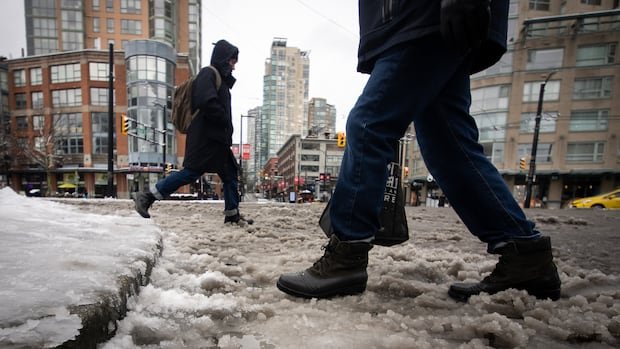

The speed at which seniors walk could serve as a crucial indicator of their overall health, as per findings from McMaster researchers specializing in aging.
Julie Richardson, a professor at McMaster University’s School of Rehabilitation Science, emphasized the significance of walking speed as a measurable gauge of essential function. She highlighted its role as an indicator of mobility, independence, and general well-being in a blog post on the university’s Optimal Aging Portal.
As individuals age, walking patterns evolve, requiring more cognitive effort to maintain balance and navigate varying terrains. Changes such as shorter steps, prolonged time with both feet on the ground, and increased stooping tend to accompany aging.
To assess overall health status, Richardson and her team suggest monitoring walking speed by comparing it to the average speed for individuals in the same age group. Measuring walking speed can be done by walking a designated distance and timing specific segments, then calculating the speed based on the time taken.
By utilizing resources provided by the team, individuals can determine how their walking speed compares to the average speed for their age group. If one’s walking speed falls below the average, consulting a healthcare professional, such as a physician or physiotherapist, is recommended for further evaluation.
Regular physical activity, including walking at an increased pace, not only offers health benefits but also enhances safety by allowing individuals to navigate various environments more efficiently. Research from the University of Pittsburgh suggests that walking speed can serve as a reliable predictor of life expectancy in older adults.
Community Members React to the Concept of Measuring Walking Speed
Residents of Hamilton, Brigitte Evering and Geoffrey Honey, aged 67, expressed their support for considering walking speed as a vital health indicator. They emphasized the importance of walking and regular physical activity in maintaining overall well-being.
Evering and Honey, who participate in a community exercise group in Hamilton, acknowledged the profound impact of walking on health and longevity. They expressed interest in measuring their walking speeds and suggested promoting awareness of average walking speeds in fitness centers to encourage individuals to monitor and improve their walking abilities.
Participation in community groups was underscored as a motivating factor for maintaining physical activity levels, with access to indoor spaces highlighted as essential for seniors, especially during inclement weather. Affordable options for indoor exercise facilities were deemed crucial for individuals with limited financial resources.
For seniors seeking to stay active, exploring the city’s seniors centers and clubs, which offer a variety of fitness and social programs, was recommended. Evering and Honey emphasized the importance of taking the first step towards a more active lifestyle, as it can lead to a positive cascade of health benefits.
The City of Hamilton provides a list of seniors centers and clubs on its website, offering a range of programs to cater to diverse interests and fitness levels.