
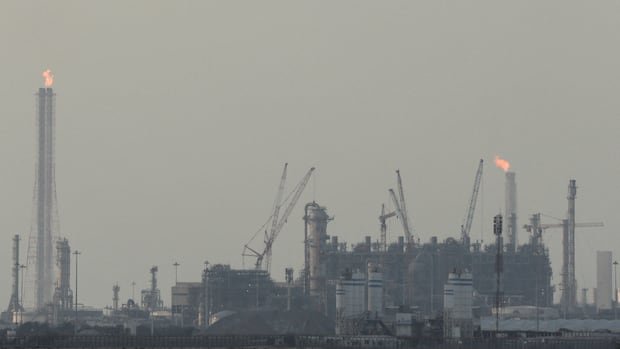

The escalating conflict in the Middle East is causing a surge in spot natural gas prices in Europe and Asia, underscoring Canada’s potential to emerge as a key stable global supplier. Natural gas prices in Europe have climbed approximately 70% since the initiation of the U.S. and Israel’s attacks on Iran, with the turmoil spreading across multiple countries in the region. Similarly, the gas price for northeast Asia has spiked by about 50% during this period.
Josephine Mills, a senior analyst at Enverus, noted that the global liquefied natural gas (LNG) market exhibits limited elasticity compared to oil. Following an attack on QatarEnergy’s facilities, a top LNG supplier, production was halted, leading to a significant gap in the eight million mmBTUs per day that Asia imports from Qatar.
The disruptions have also impacted tanker traffic in the critical Strait of Hormuz, a key passage for 20% of global LNG supplies. The uncertainty surrounding the duration of the shipping lane interference has left markets on edge, according to Werner Antweiler, an energy economist at the University of British Columbia.
Despite the challenges, the situation presents an opportunity for Canada, particularly for the LNG Canada plant in Kitimat, B.C. Mills highlighted that the current events serve as a favorable signal for advancing the second phase of LNG Canada, offering a direct supply route to Asia without navigating choke points like the Strait of Hormuz.
Kent Fellows, an economist at the University of Calgary, mentioned that while the short-term impact on LNG Canada may be limited, the project could benefit from potential global market scarcity. Prospective global LNG buyers will need to weigh the security aspect of buying from Canada, even with higher costs compared to other regions.
Antweiler emphasized that the ongoing conflict is unlikely to have a lasting impact on other Canadian energy projects in the near term. He pointed out that investment decisions in the LNG sector are based on long-term commitments and reliable partnerships.
Furthermore, a report from think tank MEI highlighted Quebec’s strategic advantages as a potential location for an LNG terminal catering to European customers seeking to lessen their dependence on Russian supply. However, Antweiler noted that pipeline infrastructure would be crucial for such a proposal to succeed, given that most of Canada’s natural gas production is concentrated in the western regions.
In conclusion, the current geopolitical tensions are reshaping the global natural gas landscape, presenting both challenges and opportunities for Canada’s energy sector.
[Link to the original article.](https://www.cbc.ca/news/canada/calgary/middle-east-war-natural-gas-prices-9.7113504)