
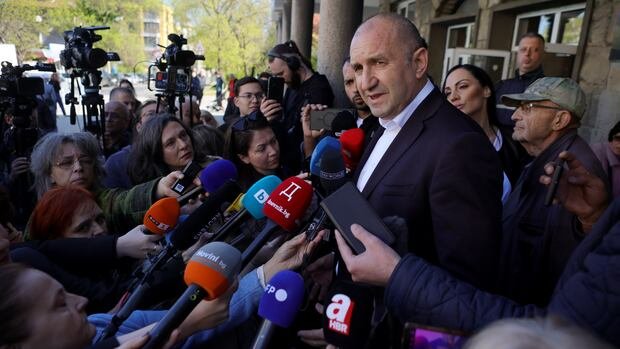

Pro-Russian ex-president Rumen Radev appears to be on track for a decisive win in Bulgaria’s election, as per official results, potentially marking an end to years of fragile coalition governments and sidelining long-standing political forces. Surpassing expectations from polls, Radev’s Progressive Bulgaria party secured 44.6% of the vote with 60% of ballots counted, hinting at the possibility of forming a strong minority government independently. However, Radev has not ruled out the option of forming a coalition with a pro-European group or a smaller party.
Progressive Bulgaria’s lead significantly outpaced the pro-European We Continue the Change-Democratic Bulgaria coalition at 14.2% and the longstanding GERB party, led by former Prime Minister Boyko Borissov, at 13%.
“This victory represents hope triumphing over distrust, freedom prevailing over fear, and ultimately, a victory for morality,” Radev stated during a press conference on Sunday, ahead of the final election results.
A Eurosceptic and former military pilot, Radev resigned from the presidency in January to participate in the parliamentary election following mass protests that ousted the previous government in December. Riding a wave of discontent with political instability, Bulgarian voters, tired of corruption and entrenched parties, supported Radev’s platform for change.
Comparisons were drawn between Radev’s campaign and Hungary’s Viktor Orban, particularly in his stance on improving relations with Moscow and advocating for increased Russian energy supplies to Europe. Radev also criticized the EU’s heavy reliance on renewable energy sources.
However, Radev’s policy agenda remains ambiguous, with uncertainties surrounding potential foreign policy shifts in Bulgaria, a NATO member on the EU’s southeastern border that recently adopted the euro, a move questioned by Radev. On the prospect of judicial reform, Radev expressed willingness to collaborate with PP-DB and affirmed Bulgaria’s commitment to its European trajectory.
Bulgaria, having made significant progress since the end of communism in 1989 and EU accession in 2007, has seen improvements in life expectancy, low unemployment rates, and strengthened economic safeguards post-euro adoption. Yet, the country still trails behind other EU nations in various aspects. Rising living costs emerged as a critical concern post-EU entry, leading to the downfall of the previous government amid public protests against proposed tax hikes and increased social security contributions.