

Newly Revealed Documents Detail Unprecedented Fish Event at Canadian Nuclear Plant
Nearly two years after an unusual fish incident at Canada’s largest nuclear facility caused concerns about reactor safety, recently obtained records shed light on the extraordinary nature of the event. Experts are cautioning that unusual environmental conditions are posing a growing challenge for nuclear plants worldwide.
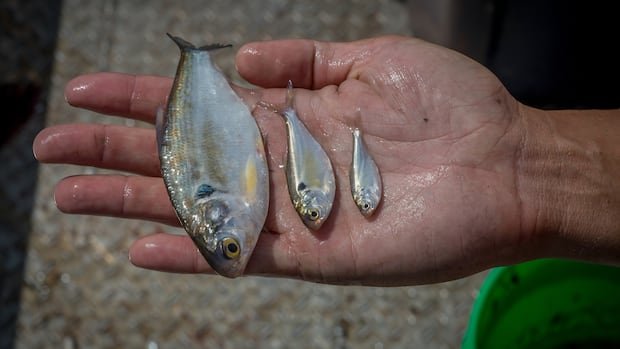
In February 2025, a massive influx of gizzard shad overwhelmed the cooling systems at the Bruce Nuclear Generating Station near Tiverton, Ont. This led to the shutdown of one reactor, decreased power output in another reactor, and resulted in dead fish washing up on Lake Huron’s shores for several days.
CBC News obtained over 1,200 pages of federal and provincial documents that detail how an environmental phenomenon involving a cold-sensitive fish species tested the resilience of Canada’s largest nuclear power plant in unexpected ways.
Bruce Power, the plant’s operator, declined a live interview but provided a written statement, avoiding specific queries from CBC News.
The investigations conducted by Bruce Power revealed that the plant faced “a novel environmental event,” as confirmed by Canada’s nuclear regulator, which described an unprecedented volume of gizzard shad overwhelming the plant’s fish deterrent systems.
According to a report, the incident disrupted the cooling systems for two operational reactors on February 13, 2025, leading to the shutdown of Unit 2 and a reduction in power at Unit 1. A separate report in June 2025 highlighted that the fish runs on February 1 and February 13 had implications for reactor safety.
Experts emphasized that challenges to reactor safety imply a reduction in the effectiveness of defense mechanisms, prompting mandatory plant shutdowns. However, former Bruce Power manager Douglas Boreham clarified that while operational impacts were observed, there was no actual threat to reactor safety.
The Canadian Nuclear Safety Commission’s report in April 2026 outlined the potential consequences of the fish event, warning of a scenario where all four Bruce A units could be shut down.
The scale of the fish occurrence was staggering, with estimates indicating that 8.1 million gizzard shad were present near the plant on a single day in February 2025. The report attributed the event to severe winter conditions and a surge in fish populations due to milder winters in preceding years.
The event underscored the need for nuclear plants to adapt to changing environmental conditions, as seen in instances at other facilities globally where cooling systems were impacted by environmental factors.
Bruce Power’s post-event analysis identified shortcomings in real-time environmental monitoring and organizational failures to address emerging challenges. The company has since invested nearly $10 million in mitigation measures to prevent future disruptions.
Enhanced defenses, including physical barriers, acoustic deterrents, and advanced monitoring systems, have been put in place to mitigate the risk of similar incidents. Experts stress the importance of proactive measures to safeguard nuclear plant operations as they play a crucial role in providing low-carbon electricity.
The incident at Bruce Power serves as a reminder of the evolving challenges facing nuclear plants in the context of climate change and the imperative to bolster resilience against unforeseen environmental events.