
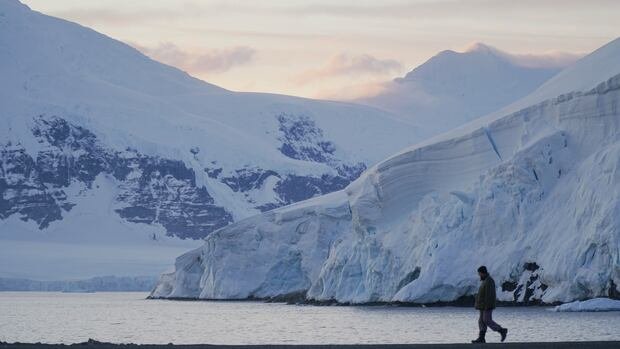

The head of the Royal Canadian Navy, Vice-Admiral Angus Topshee, has disclosed ongoing discussions with the Chilean navy regarding a potential joint Antarctic expedition next spring. The expedition aims to extend for two weeks aboard a Chilean vessel with a scientific team on board.
In a recent interview with CBC News, Topshee expressed enthusiasm about the possibility, highlighting the shared interest in monitoring climate change impacts at both polar regions. He spearheaded the inaugural all-Canadian Antarctic expedition earlier this year, leading a team of 15 climate scientists aboard HMCS Margaret Brooke.
During the month-long journey, the team conducted various research tasks, including collecting water, air, and sediment samples, mapping the ocean floor, and analyzing snow and air for contaminants. Topshee noted the excitement and potential for impactful research observed during his visit to the Margaret Brooke in Antarctica.
The news of a potential second Antarctic mission in collaboration with Chile was well-received by polar scientists at the recent ArcticNet event in Calgary. David Hik, the chief scientist at Polar Knowledge Canada, hailed the 2025 expedition as a significant milestone in Canada’s Antarctic research history.
The Canadian Antarctic Research Expedition (CARE 2025), led by scientist Thomas James from Natural Resources Canada, showcased Canada’s commitment to Antarctic research. Hik emphasized the importance of this expedition as a testament to Canada’s capabilities and future opportunities in Antarctic science.
At the ArcticNet conference, the CARE 2025 team presented early findings from their research endeavors earlier this year. Research scientist Sandy Steffen highlighted the discovery of microplastics in Antarctic samples, indicating a concerning presence of contaminants in the pristine region.
The expedition also involved retrieving sediment cores from the ocean floor for analysis, providing insights into glacial retreat patterns over centuries. Alexandre Normandeau, a research scientist, emphasized the value of continued Canadian presence in Antarctic research, underscoring the potential for establishing a long-term Antarctica program for Canada.
Both scientists and the navy see the ongoing presence in Antarctica as crucial not only for scientific advancements but also for geopolitical interests. Vice-Admiral Topshee emphasized the importance of understanding climate change impacts in both polar regions, citing the need for enhanced predictions to support communities in the Arctic.