
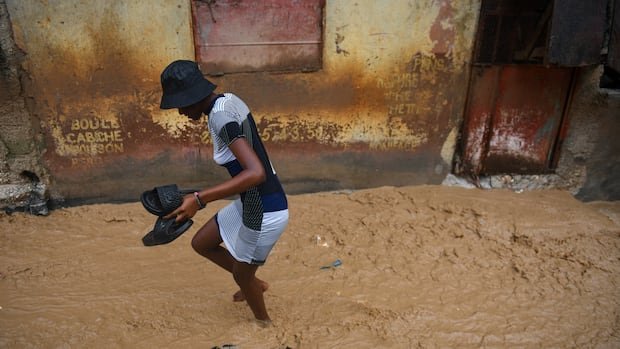

Hurricane Melissa wreaked havoc in Cuba, Jamaica, and Haiti, leading to numerous fatalities and extensive damage. The storm caused power outages and forced residents to evacuate their homes in flooded areas. In Jamaica’s St. Elizabeth parish, Santa Cruz faced a landslide that blocked main roads, leaving streets covered in mud. Residents struggled to salvage their belongings amidst the chaos. A high school acting as a shelter had part of its roof torn off by strong winds.
The aftermath of the catastrophic Category 5 hurricane left a trail of destruction, with at least 25 reported deaths and 18 individuals missing in Haiti. The southern coastal town of Petit-Goave was particularly hard-hit, with flooding resulting in the collapse of numerous homes. Local authorities, like Mayor Jean Bertrand Subreme, urgently appealed for government assistance in rescuing victims.
In Cuba, reports indicated collapsed houses, blocked roads in mountainous regions, and roofs ripped off buildings, especially in the southwest and northwest areas. Around 735,000 people sought refuge in shelters. Residents like Reinaldo Charon from Santiago de Cuba described the night as “hellish,” with continuous rain and strong winds causing widespread distress.
Melissa, initially a Category 3 hurricane in Cuba, was later downgraded to a Category 2 storm. By Wednesday afternoon, it sustained winds of 150 km/h and was moving northeast. The U.S. National Hurricane Center in Miami reported the hurricane’s location approximately 135 kilometers southeast of the central Bahamas.
Canadian authorities advised against travel to various regions, including Jamaica, specific parts of Cuba, Haiti, and areas in the Bahamas, Turks and Caicos Islands, and Bermuda. Emergency assistance for Canadians was made available through the Emergency Watch and Response Centre.
The United States pledged support for the Caribbean in recovery efforts, with rescue and response teams being dispatched to assist affected countries. The storm’s impact on Cuba’s already struggling economy raised concerns about prolonged power outages, fuel shortages, and food scarcities.
In the midst of the disaster, affected communities like Black River in Jamaica faced catastrophic conditions, prompting urgent appeals for aid. The road to recovery was deemed challenging, with authorities emphasizing the importance of restoring normalcy quickly despite the extensive damage caused by Hurricane Melissa.