
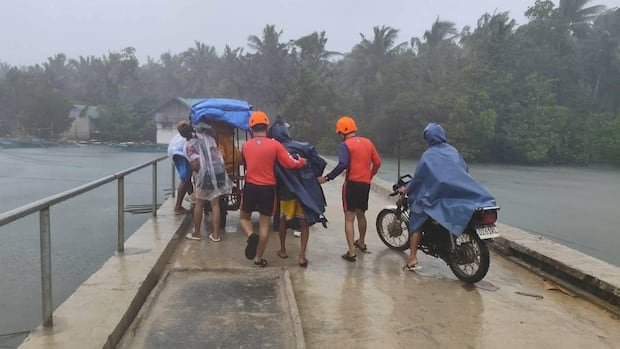

Super Typhoon Fung-wong made landfall on the northeastern coast of the Philippines on Sunday, resulting in the deaths of two individuals and the evacuation of over a million people from flood and landslide-prone regions. With sustained winds reaching up to 185 km/h and gusts up to 230 km/h, the massive storm hit Dinalungan town in Aurora province. It is the largest storm to threaten the Philippines this year, covering a significant portion of the archipelago with its expansive 1,600-kilometer-wide rain and wind band.
Coming from the Pacific, Fung-wong arrived while the Philippines was still recovering from the aftermath of Typhoon Kalmaegi, which caused significant damage in central island provinces before moving on to Vietnam. President Ferdinand Marcos Jr. declared a state of emergency due to the severe impact of Kalmaegi and the anticipated devastation from Fung-wong, known as Uwan in the Philippines.
Designated as a super typhoon due to sustained winds exceeding 185 km/h, Fung-wong prompted the evacuation of over 916,860 individuals from high-risk areas in northeastern provinces, including Bicol, a region prone to cyclones and mudflows from the Mayon volcano. Defence Secretary Gilberto Teodoro Jr. emphasized the potential catastrophic consequences of Fung-wong and urged residents to heed evacuation orders to avoid the risks of flash floods, landslides, and coastal surges.
With more than 30 million people facing potential hazards from the storm, the Office of Civil Defence stressed the importance of preparedness and response measures. The Red Cross established over 500 evacuation centers accommodating nearly 21,000 families, providing essential support in disaster management. Efforts to clear debris, rescue individuals, and distribute aid were underway as Fung-wong approached with its powerful winds and heavy rainfall.
As Fung-wong’s impact began to be felt, several areas experienced power outages, and authorities in northern provinces preemptively closed schools and government offices to ensure public safety. The situation was described as dire by Reiza Dejito, the country director for CARE Philippines, with flash floods isolating communities, disrupting communication, and hindering transportation.
The devastating effects of Fung-wong added to the Philippines’ long history of natural disasters, with the country being regularly battered by typhoons, storms, earthquakes, and volcanic activity. Despite the challenges posed by such calamities, the nation’s resilience and preparedness efforts remain crucial in mitigating the impact of these recurring events.